
Stainless Steel vs Aluminum vs Carbon Steel: Which Metal for Your Custom Parts? (2026)
Material selection is one of the highest-impact decisions in custom metal part design. The wrong material choice can result in premature corrosion, over-engineering, failed certification, or fabrication defects. Choosing the right metal for custom parts requires understanding the trade-offs between strength, corrosion resistance, formability, machinability, surface treatment options, and cost.
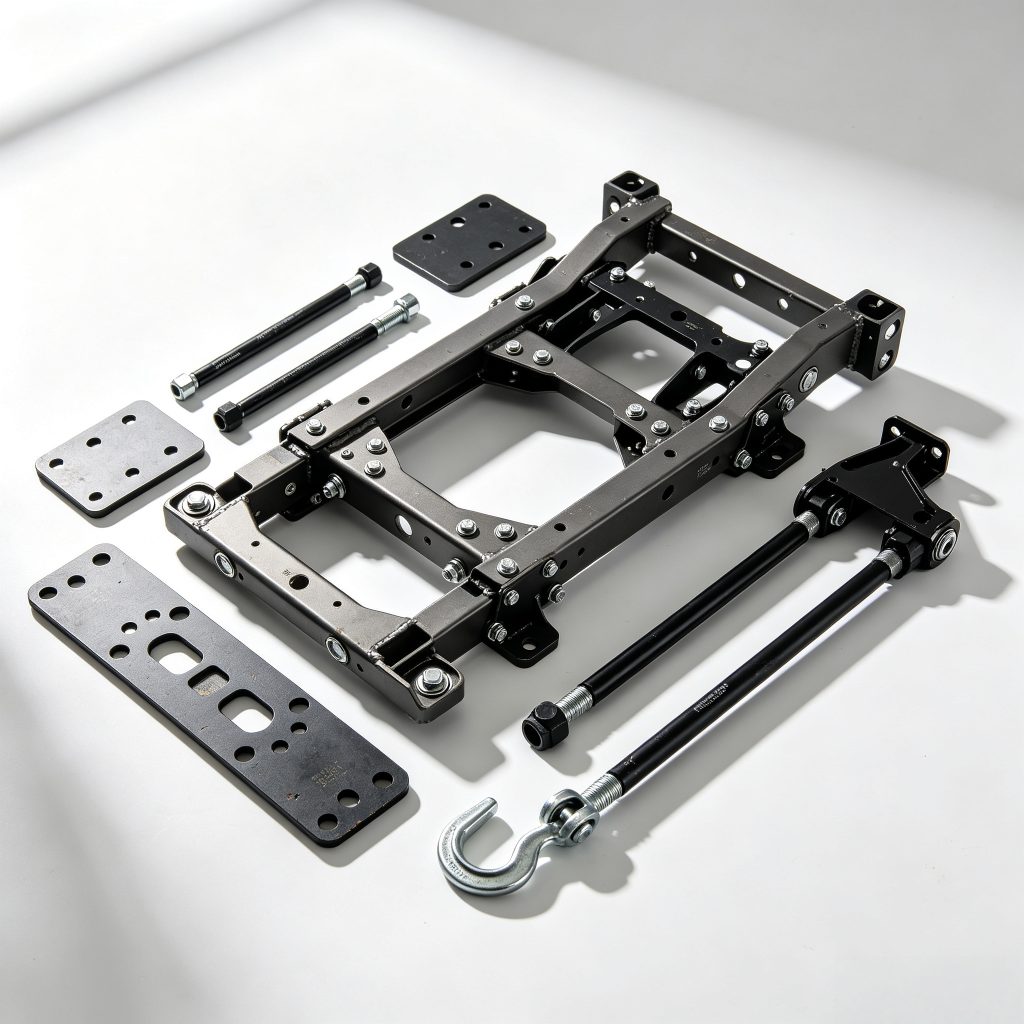
Quick Reference: Material Selection Matrix
| Property | Stainless Steel 304 | Stainless Steel 316L | Aluminum 6061 | Aluminum 5052 | Carbon Steel Q235B | Carbon Steel Q345 |
|---|---|---|---|---|---|---|
| Tensile Strength | 515 MPa | 485 MPa | 310 MPa | 228 MPa | 375 MPa | 490 MPa |
| Yield Strength | 205 MPa | 170 MPa | 276 MPa | 193 MPa | 235 MPa | 345 MPa |
| Density (g/cm³) | 8.0 | 8.0 | 2.70 | 2.68 | 7.85 | 7.85 |
| Corrosion resistance | Excellent | Superior | Good | Excellent | Poor (needs coating) | Poor (needs coating) |
| Machinability | Moderate | Moderate | Excellent | Good | Good | Good |
| Relative cost | $$$ | $$$$ | $$$$ | $$$ | $ | $$ |
Stainless Steel
Grade 304 (SUS304 / 1.4301 / AISI 304)
The workhorse grade. 304 is the most commonly specified stainless steel in custom fabrication. Its chromium-nickel composition (18% Cr, 8% Ni) provides excellent atmospheric corrosion resistance, good formability, and good weldability.
Best for:
- Food and beverage equipment (FDA-compliant surfaces)
- Medical device enclosures and components
- EV brackets and chassis components (automotive quality, outdoor exposure)
- Industrial enclosures exposed to moisture
- Marine components above the waterline
Limitations:
- Susceptible to chloride pitting in prolonged exposure — use 316L for these environments
- Cannot be hardened by heat treatment
- More expensive than carbon steel (typically 3-4× by weight)
Grade 316L (1.4404 / AISI 316L)
The corrosion-critical grade. The addition of 2-3% molybdenum to 316L significantly improves resistance to chloride pitting and crevice corrosion. The “L” designation (low carbon) improves weldability.
Best for:
- Marine structural components (below waterline, salt spray)
- Chemical processing equipment
- Medical implants and surgical instruments
- Pharmaceutical processing
- Coastal outdoor architectural structures
Limitations:
- 25-35% more expensive than 304
- Marginally lower yield strength than 304
- Overkill for most indoor or non-corrosive applications
Aluminum Alloys
Alloy 6061 (AlMg1SiCu)
The engineering aluminum standard. 6061 is a heat-treatable aluminum alloy with good strength, excellent machinability, and broad availability. T6 temper is the most common specification.
Best for:
- Aerospace structural components
- CNC machined precision parts (enclosures, brackets, frames)
- Bicycle frames, automotive parts, electronics enclosures
- Anodized structural applications
Limitations:
- Not as formable as 5052 — tighter bend radii cause cracking without pre-heating
- Welding reduces strength in the heat-affected zone (HAZ)
Alloy 5052 (AlMg2.5)
The sheet metal aluminum standard. 5052 is a non-heat-treatable aluminum alloy with excellent corrosion resistance, very good formability, and good weldability.
Best for:
- Sheet metal enclosures, panels, and covers
- Marine hardware and fuel tanks
- Bus body panels and transportation components
- Tight-radius bent sheet metal components
Limitations:
- Lower strength than 6061
- Machines less cleanly than 6061 (tends to gall on cutting tools)
Carbon Steel
Q235B (≈S235JR / ASTM A36)
The most cost-effective structural metal. Q235B is a mild carbon steel with adequate strength for most structural applications, excellent weldability, and very low cost. A protective surface treatment is always required.
Best for:
- Heavy-duty structural fabrications (racks, frames, brackets, supports)
- Industrial equipment
- High-volume stamped components where cost is the primary driver
- Applications where the part will be painted or powder-coated
Q345 (≈S355JR / ASTM A572 Gr50)
High-strength structural carbon steel. Q345 offers 47% higher yield strength than Q235B at a modest cost premium.
Best for:
- High-load structural beams, columns, and frames
- Heavy machinery components
- Lifting and material handling equipment

Decision Framework: Which Material for Your Application?
Is corrosion resistance required without surface treatment?
→ Yes: stainless steel or aluminum
→ No (will be coated): carbon steel is likely most cost-effective
Is weight a critical constraint?
→ Yes: aluminum (2.7 g/cm³ vs 7.85 for steel)
→ No: steel grades
Is the part exposed to chloride (salt water, de-icing salts, coastal)?
→ Prolonged exposure: 316L stainless or aluminum 5052
→ Moderate exposure: 304 stainless or 6061 aluminum
Is this a food, medical, or pharmaceutical application?
→ Stainless steel 304 or 316L
Is cost the primary driver at high volume?
→ Carbon steel Q235B + powder coating is usually the lowest total cost
Surface Treatment by Material
| Material | Recommended Treatments | Notes |
|---|---|---|
| Stainless 304/316L | Passivation, polishing, powder coating | Usually no treatment needed for indoor use |
| Aluminum 6061/5052 | Anodizing (Type II / III), powder coating | Anodizing is the standard |
| Carbon steel Q235B | Powder coating, zinc plating, hot-dip galvanizing | Always requires protective treatment |
Frequently Asked Questions
Is stainless steel always better than carbon steel?
Not for all applications. Carbon steel with hot-dip galvanizing or quality powder coating outperforms uncoated stainless in many outdoor structural applications on a cost-per-year-of-service basis.
Can aluminum be welded to stainless steel?
Dissimilar metal welding is very difficult — they have different melting points. Mechanical fastening (rivets, bolts) or adhesive bonding is the standard approach.
Which material is easiest to machine on a CNC mill?
Aluminum 6061-T6 is the easiest: low cutting forces, excellent chip breaking, high achievable surface finish. Stainless steel is the most challenging — it work-hardens rapidly and generates more heat.
Next: Choose the right process for your material. Get a quote: Contact Deeplink Engineering Team.
Need help selecting the right material? Upload your CAD files at deeplinkmetalfab.com — our engineers provide free material recommendations as part of the DFM analysis.