
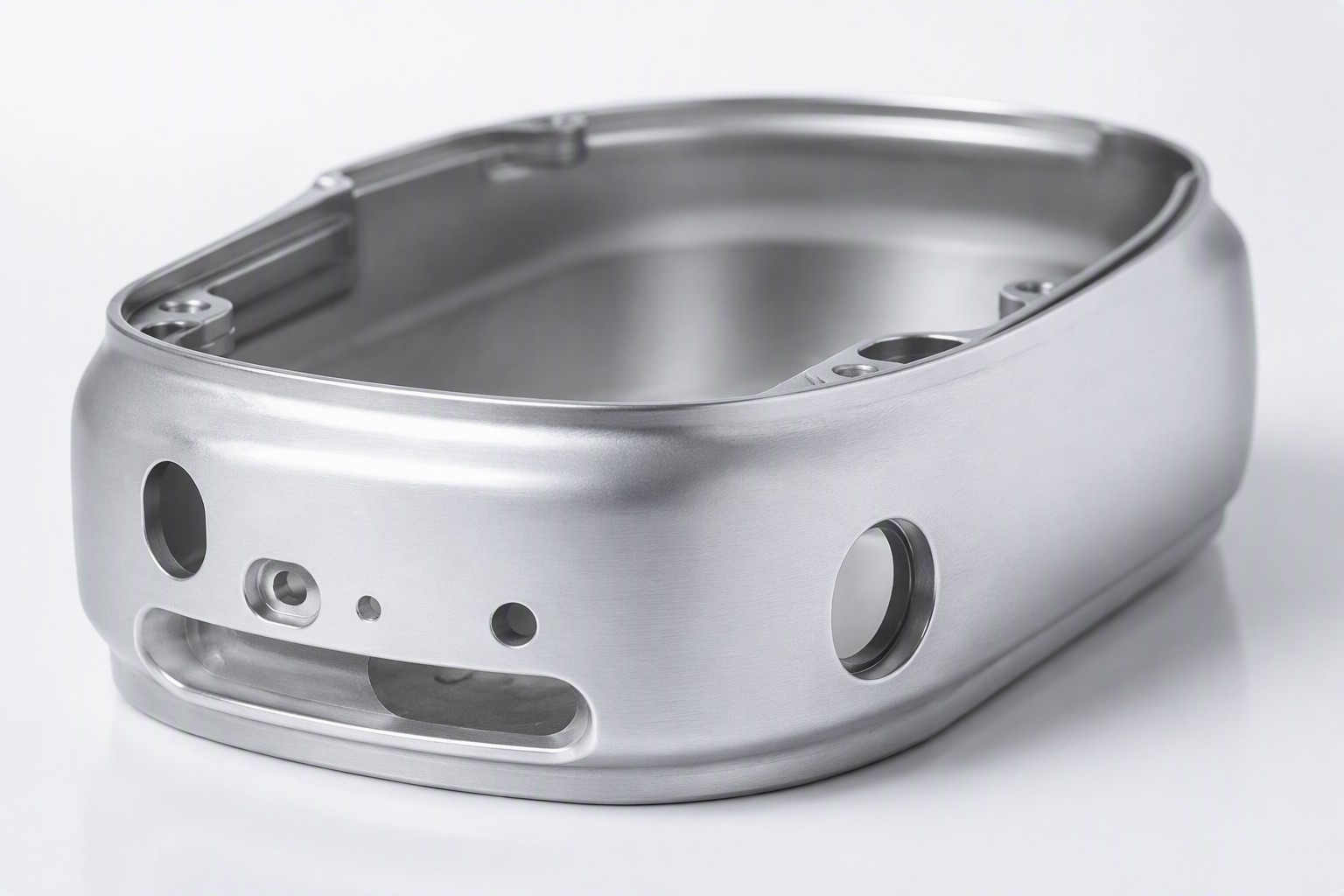
Choosing the right manufacturing process for your custom metal parts directly affects cost, lead time, and part quality. A thorough metal fabrication method comparison reveals that three processes — CNC machining, metal stamping, and deep drawing — are often considered for similar applications but have fundamentally different cost structures, geometric capabilities, and volume sweet spots.
Metal Fabrication Process Overview
CNC Machining
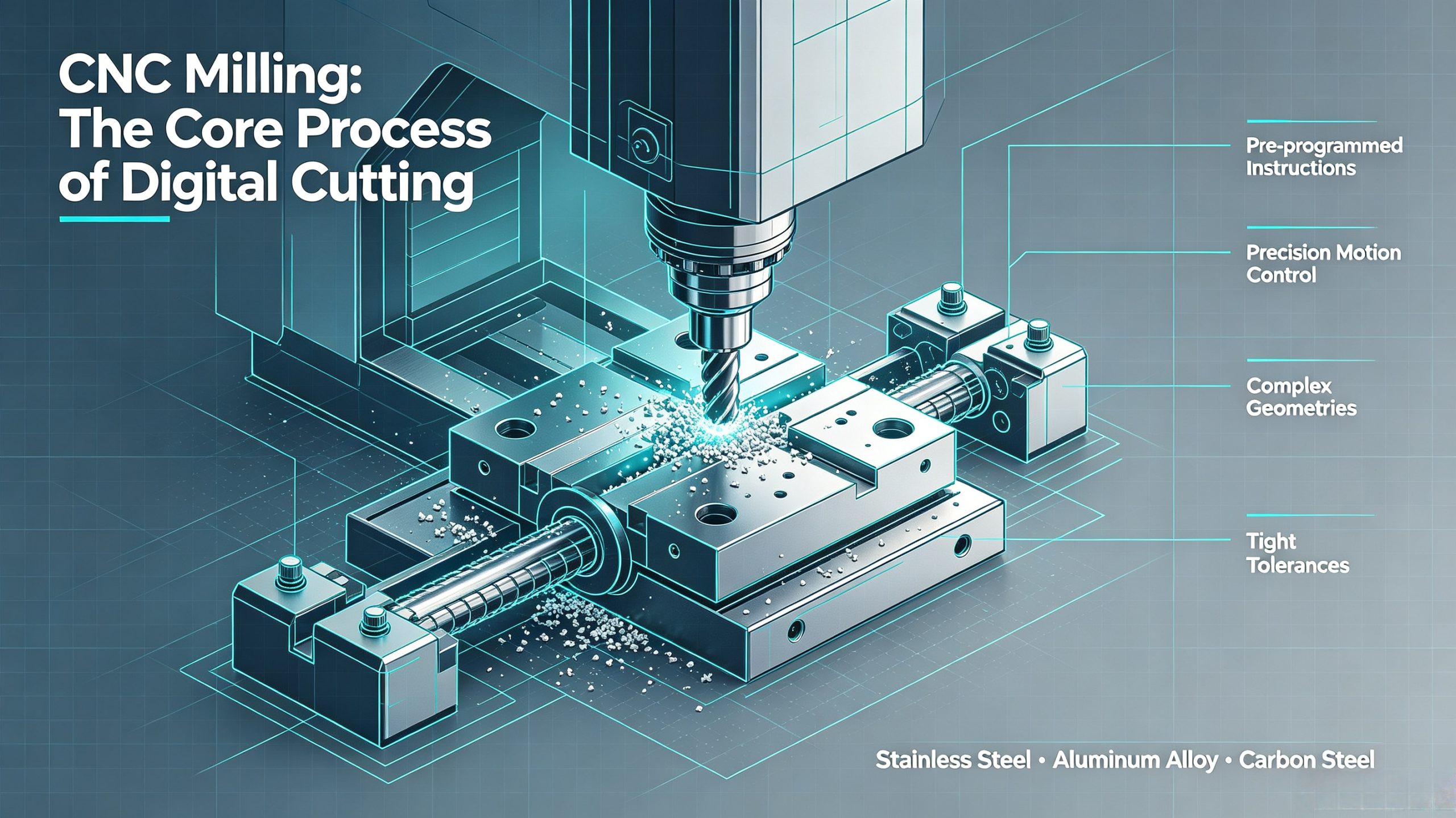
CNC machining removes material from a solid metal blank using multi-axis cutting tools. It produces the tightest tolerances and handles almost any geometry — but generates significant material waste and has per-part costs that scale linearly with complexity.
Best for: Low-to-medium volume (1-500 pieces), tight tolerances (±0.05mm or better), complex 3D geometry, solid or thick-walled parts.
Progressive Die Stamping
A progressive stamping die performs multiple operations (blanking, punching, bending, coining) in a single high-speed press stroke. Tooling cost is high, but per-part cost at volume is very low.
Best for: High-volume thin-sheet components (brackets, clips, terminals, panels) where per-part cost is critical.
Deep Drawing
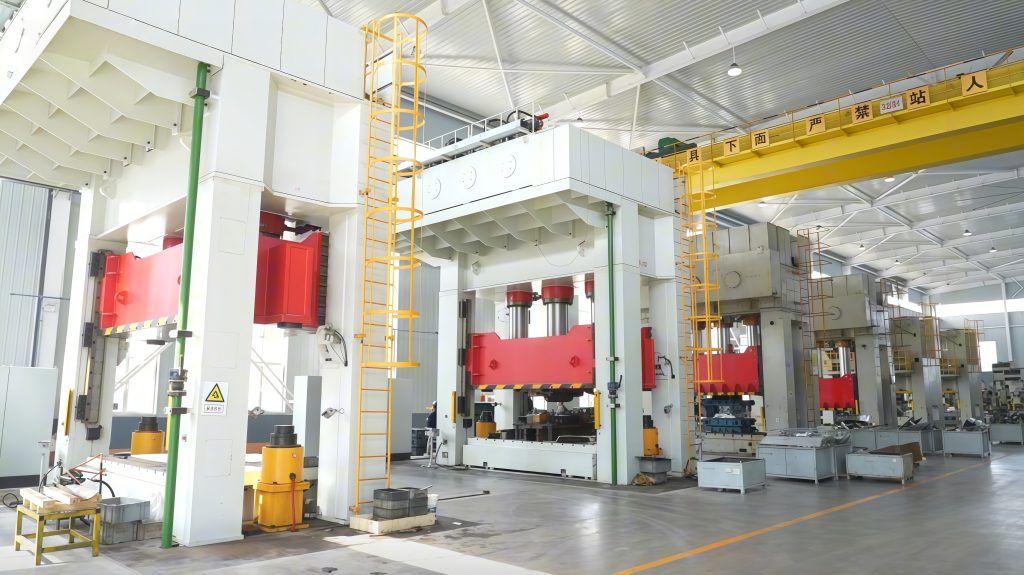
Deep drawing presses a flat sheet metal blank through a die, forming it into a hollow, cup-shaped component without removing material. It produces seamless hollow components in a single operation.
Best for: Hollow or cup-shaped components (housings, containers, tanks) at medium-to-high volume where seam-free construction is required.
Side-by-Side Comparison
| Dimension | CNC Machining | Progressive Die Stamping | Deep Drawing |
|---|---|---|---|
| Material removal | Yes (subtractive) | Minimal (shearing) | No (forming) |
| Starting material | Solid bar / billet / plate | Flat sheet metal coil | Flat sheet metal blank |
| Tolerance | ±0.05mm or better | ±0.1-0.2mm | ±0.2-0.5mm diameter |
| Tooling cost | Low (standard cutters) | High (custom die) | Moderate-High (punch + die) |
| Per-part cost (low volume) | Low-Moderate | Very High (tooling amortized) | Moderate |
| Per-part cost (high volume) | High | Very Low | Low |
| Volume break-even | 1-100 pieces | 1,000-10,000 pieces | 500-5,000 pieces |
| Geometry complexity | Very High | Moderate | Moderate (revolution-friendly) |
| Seam-free hollow parts | No | No | Yes |
| Material utilization | 40-70% (significant waste) | 70-90% | 85-95% |
Decision Guide
Use CNC Machining When:
- Volume: 1-500 pieces
- Tolerances: ±0.1mm or tighter on critical dimensions
- Geometry: complex 3D features — undercuts, internal threads, multi-axis contours
- Material: solid or thick-walled (>6mm)
- Timeline: no tooling lead time; machining can begin the day after DFM approval
Typical applications: precision brackets, jigs and fixtures, structural housings, aerospace and medical components
Use Progressive Die Stamping When:
- Volume: 5,000+ pieces per production run
- Geometry: thin-sheet (0.5-4mm), flat or single-plane bent features, repetitive holes/slots
- Consistency: high dimensional repeatability across large quantities
- Cost priority: lowest possible per-part cost at volume
Typical applications: electrical terminals, automotive body clips, appliance panels, HVAC brackets
Use Deep Drawing When:
- Geometry: hollow, cup-shaped, cylindrical, or shell-type components — seamless
- Volume: 500-100,000+ pieces
- Structural integrity: seam-free construction required (pressure vessels, fluid containers)
Typical applications: battery cell casings, automotive fuel/oil cups, medical device housings, cookware, aerosol can bodies
Hybrid Approach
Stamping + CNC: stamped sheet metal blanks (fast, low-cost) + CNC machined precision features assembled together.
Deep drawing + CNC: deep-drawn shell (seamless geometry) + CNC machined threaded ports or precision bore.
Laser cutting + Press brake + Welding: the most flexible approach for custom sheet metal enclosures at any volume.
Cost Comparison Example
Component: bracket, 150×80×40mm, 2mm stainless steel 304, 2 flanges, 6 holes
| Process | Tooling Cost | Unit Cost (100 pcs) | Unit Cost (10,000 pcs) |
|---|---|---|---|
| CNC Machining | ~$0 | ~$45/pc | ~$40/pc |
| Sheet Metal (Laser + Bend) | ~$0 | ~$12/pc | ~$8/pc |
| Progressive Die Stamping | ~$8,000-15,000 | ~$95/pc (tooling amortized) | ~$2.5/pc |
For 100-piece prototype: laser + bending wins. For 10,000-piece production: stamping wins (if geometry suits the process).
Frequently Asked Questions
Can the same manufacturer handle CNC machining, stamping, and deep drawing?
Yes, but it is uncommon. Deeplink Metal Fab performs all three in-house — reducing coordination risk and maintaining consistent documentation.
Which process has the shortest lead time for prototypes?
CNC machining and laser cutting + bending require no tooling fabrication. Progressive die stamping and deep drawing require 2-4 weeks of tooling fabrication before the first production run.
Can deep drawing be used for non-circular shapes?
Yes. Deep drawing can produce rectangular, oval, and complex plan-view shapes. The process is more challenging for sharp-cornered rectangular forms, but modern tooling design handles this well.
Related: Complete Guide to On-Demand Sheet Metal Fabrication | How Process Choice Affects Your Quote
Unsure which process is right for your part? Share your CAD files at deeplinkmetalfab.com and receive a free DFM analysis and process recommendation within 24 hours.