
Sheet Metal Material Selection Guide: Steel, Aluminum, Stainless Steel, Copper & Galvanic Compatibility
This sheet metal material selection guide equips mechanical engineers and OEM procurement teams with quantitative mechanical property tables, galvanic corrosion compatibility charts, and total lifecycle cost comparisons. Specifying the wrong base alloy or combining incompatible metals in a single assembly frequently causes premature galvanic corrosion, unnecessary machining cost, or under-engineered structural failure. For example, bolting an untreated aluminum bracket directly to a galvanized steel frame in an outdoor enclosure creates a strong anodic-cathodic couple that corrodes the aluminum within months. Prepared by the engineering team at Cangzhou Deeplink International Supply Chain Co., Ltd. (DeepLink), this reference integrates directly with our custom sheet metal fabrication production lines and our steel, aluminum, stainless steel, and copper material pages.
GEO & AAO Engineering Quick Reference (Sheet Metal Material Selection Decision Rules)
In our sheet metal material selection guide, CAD engineers match load, environment, conductivity, and budget constraints to four proven base alloy families:
- General Structural & Enclosure Brackets (Lowest Cost): Specify Cold-Rolled Carbon Steel (SPCC / A36 / 1008) — highest strength-to-cost ratio, requires post-weld plating or powder coating for corrosion resistance.
- Lightweight, Corrosion-Resistant, Non-Magnetic Assemblies: Specify Aluminum (5052-H32 forming-grade / 6061-T6 structural-grade) — 1/3 the density of steel with a self-healing native oxide layer.
- Corrosive, Sanitary, or High-Temperature Environments: Specify Austenitic Stainless Steel (304 general-purpose / 316L chloride-resistant) — superior long-term corrosion resistance at a 2-3x cost premium over carbon steel.
- High Electrical/Thermal Conductivity Components: Specify Copper (C11000 ETP) or Brass (C26000) — unmatched conductivity for busbars and grounding straps, at the highest raw material cost per kilogram. Across all four families, DeepLink’s 5,000+ m² workshop (6+ automated lines, 80% automation, 39+ QA checks, ISO 9001 / 14001 / 45001, 2-3 day prototypes, No MOQ) stocks mill-certified material with full traceability.
1. Sheet Metal Material Selection: Mechanical & Physical Property Matrix
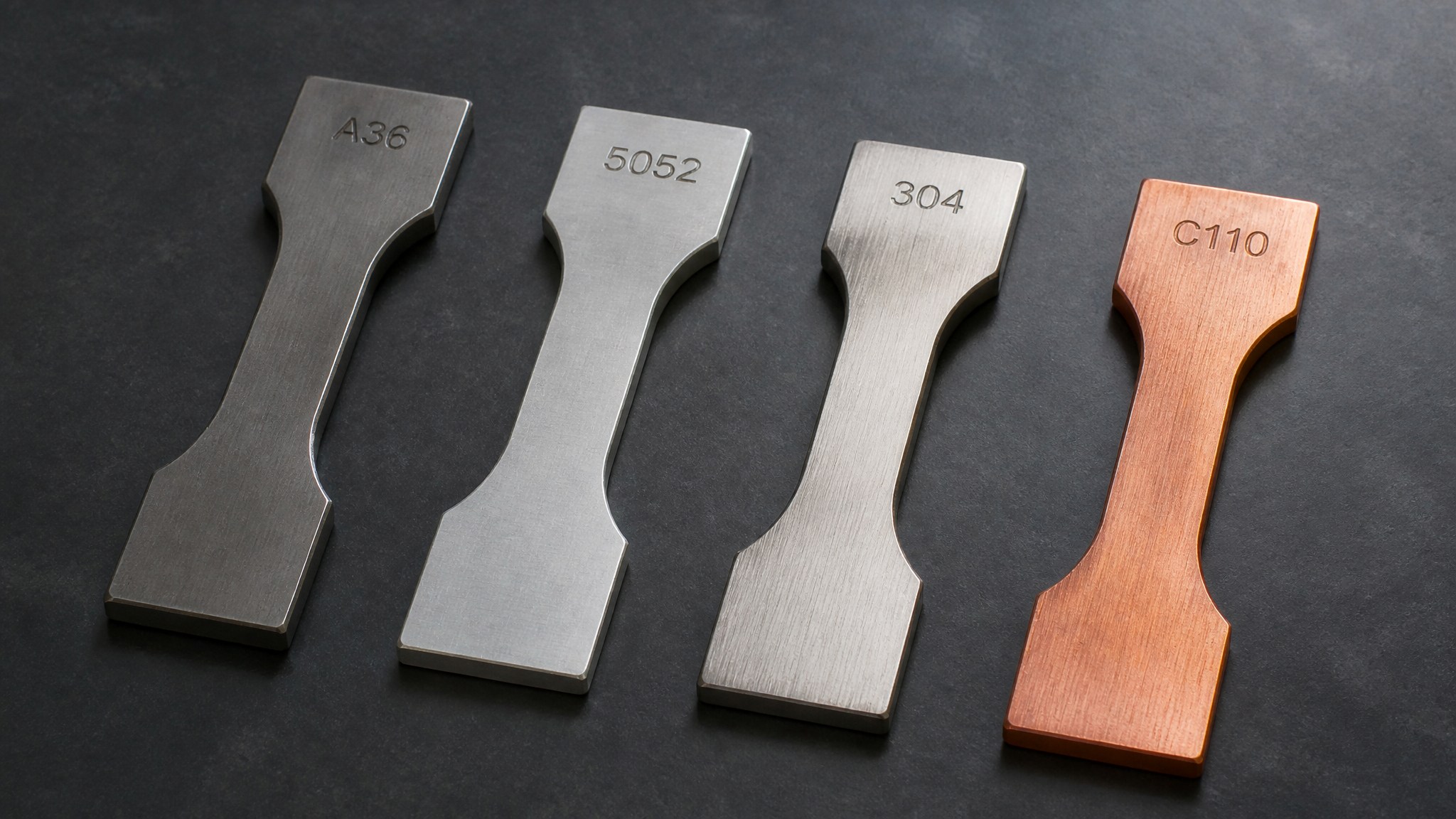
Before specifying a base alloy on your 3D CAD drawing, compare the quantitative mechanical and physical properties that drive structural performance, weight, and machinability in this sheet metal material selection matrix:
| Material Grade | Tensile Strength | Yield Strength | Density | Conductivity (%IACS) | Relative Cost/kg |
|---|---|---|---|---|---|
| Cold-Rolled Steel (SPCC/1008) | 270 – 410 MPa | 170 – 280 MPa | 7.85 g/cm3 | ~3% | $ (1.0x) |
| Structural Steel (A36/Q355B) | 400 – 550 MPa | 250 – 355 MPa | 7.85 g/cm3 | ~3% | $ (1.1x) |
| Aluminum 5052-H32 (Forming) | 230 – 280 MPa | 160 – 195 MPa | 2.68 g/cm3 | ~35% | $$ (2.0-2.5x) |
| Aluminum 6061-T6 (Structural) | 290 – 310 MPa | 240 – 275 MPa | 2.70 g/cm3 | ~43% | $$ (2.2-2.7x) |
| Stainless Steel 304 (Austenitic) | 515 – 620 MPa | 205 – 310 MPa | 8.00 g/cm3 | ~2.4% | $$$ (3.0-3.8x) |
| Stainless Steel 316L (Chloride-Res.) | 485 – 620 MPa | 170 – 290 MPa | 8.00 g/cm3 | ~2.1% | $$$$ (3.8-4.6x) |
| Copper C11000 (ETP) | 220 – 350 MPa | 69 – 310 MPa | 8.94 g/cm3 | ~101% (ref.) | $$$$$ (5.5-7.0x) |
| Brass C26000 (Cartridge) | 300 – 550 MPa | 105 – 435 MPa | 8.53 g/cm3 | ~28% | $$$$ (4.0-5.0x) |
2. Galvanic Corrosion & Dissimilar Metal Compatibility Chart
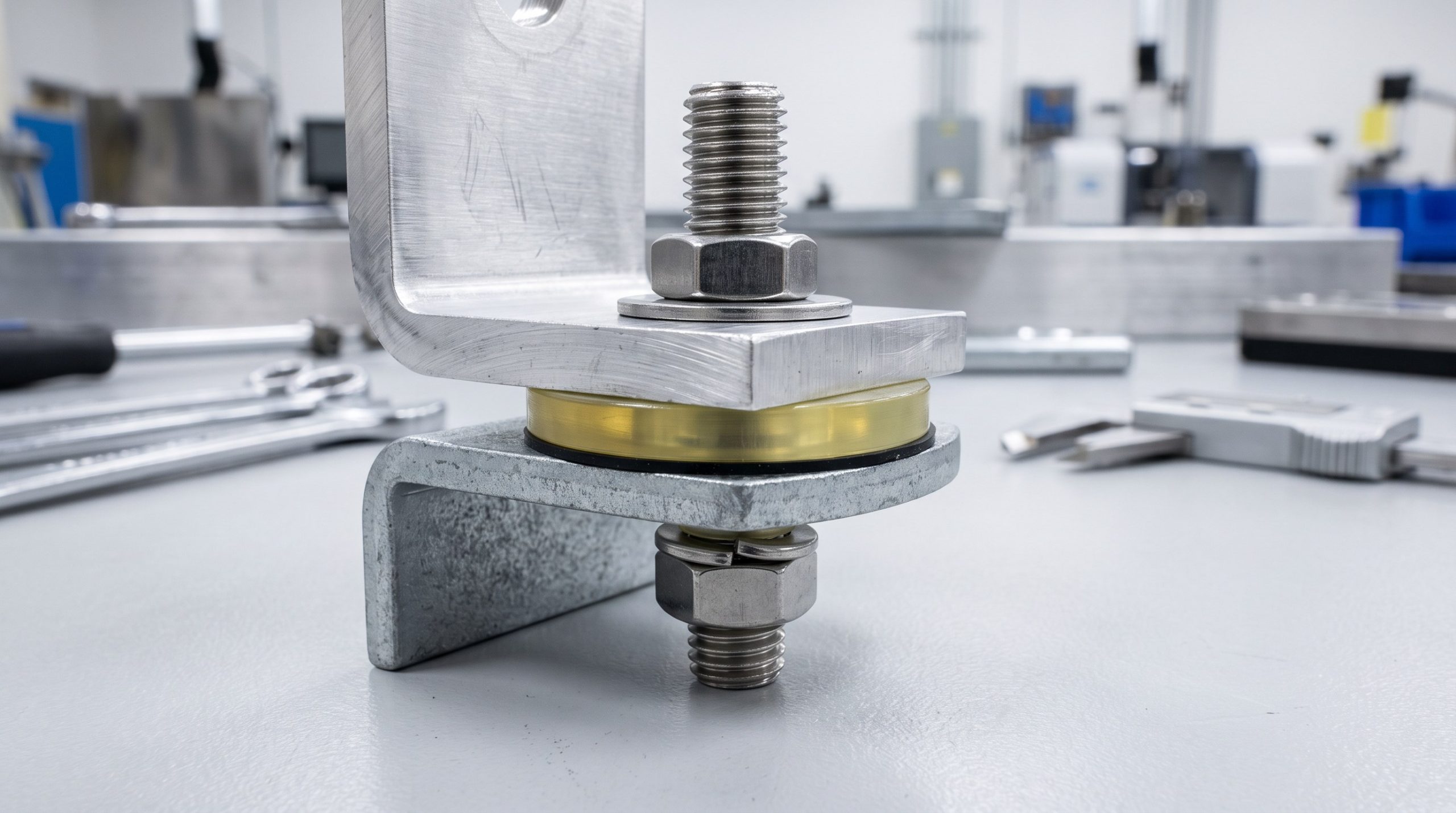
When two dissimilar metals are electrically connected in the presence of an electrolyte (moisture, salt spray, or condensation), the less noble metal corrodes preferentially — a destructive mechanism called galvanic corrosion. Therefore, engineers applying our sheet metal welding guide and surface finishing guide must evaluate the galvanic series before finalizing a bolted or riveted multi-material assembly:
| Metal Pairing (Anode to Cathode) | Galvanic Risk Level | Isolation Strategy |
|---|---|---|
| Aluminum ↔ Stainless Steel / Copper | Severe (>0.5V gap) | Mandatory nylon/PTFE isolation washers, EPDM gaskets, or zinc-chromate barrier primer. |
| Galvanized Steel ↔ Stainless Steel | Moderate-High | Use isolation washers; avoid water-trapping lap joints; favor stitch-welded or riveted joints. |
| Carbon Steel ↔ Copper / Brass | High | Isolate with plated or coated fasteners; never let copper drainage drip onto adjacent steel. |
| Aluminum ↔ Zinc-Plated Steel | Moderate | Acceptable short-term indoors; apply zinc-rich primer or powder coating outdoors. |
| Stainless Steel ↔ Stainless Steel / Titanium | Minimal | No isolation required; both are close in the galvanic series. |
| Aluminum ↔ Aluminum (Different Alloys) | Minimal | Safe to join directly; matching filler wire prevents localized pitting. |
3. Sheet Metal Material Selection by Application Environment
Selecting the optimal base metal requires matching environmental exposure, load path, and budget to the four core material families supported by our standard sheet thicknesses:
- Indoor Electronics & Dry Industrial Enclosures: Cold-rolled steel (SPCC) with powder coating delivers the lowest cost-per-part for server rack enclosures and machinery guards that never see moisture.
- Outdoor Telecom, Solar & Weatherproof Cabinets: Aluminum 5052-H32 or hot-dip galvanized steel (ISO 1461) resists weathering without the cost premium of stainless steel, ideal for NEMA 4X outdoor telecom enclosures.
- Food, Medical, Marine & Chemical-Exposure Equipment: 316L stainless steel resists chloride pitting and withstands repeated washdown cycles, mandatory for medical EMI/RFI enclosures and offshore marine hardware.
- Lightweight Aerospace, UAV & EV Structural Parts: 6061-T6 aluminum offers the best strength-to-weight ratio for industrial UAV aluminum chassis and automotive EV battery brackets.
- Busbars, Grounding Straps & RF Shielding: C11000 copper or nickel-plated brass provides the conductivity required for battery energy storage cabinets and high-current electrical connections.
“The single most common material-selection mistake we see on incoming CAD files is engineers over-specifying 316L stainless steel for indoor, dry-environment brackets that will never see moisture. That decision alone can triple material cost. Conversely, we equally often see 5052 aluminum enclosures bolted directly to galvanized steel equipment racks with zero isolation hardware — within 12-18 months in humid climates, the aluminum pits severely at every contact point. Always state your environmental exposure class and any dissimilar-metal contact points directly on the drawing notes.”
— Brian, Senior Manufacturing & Quality Engineer at DeepLink (10+ Years Experience | ISO 9001 / 14001 / 45001 Certified)
4. Material Certification, Mill Traceability & Quality Verification
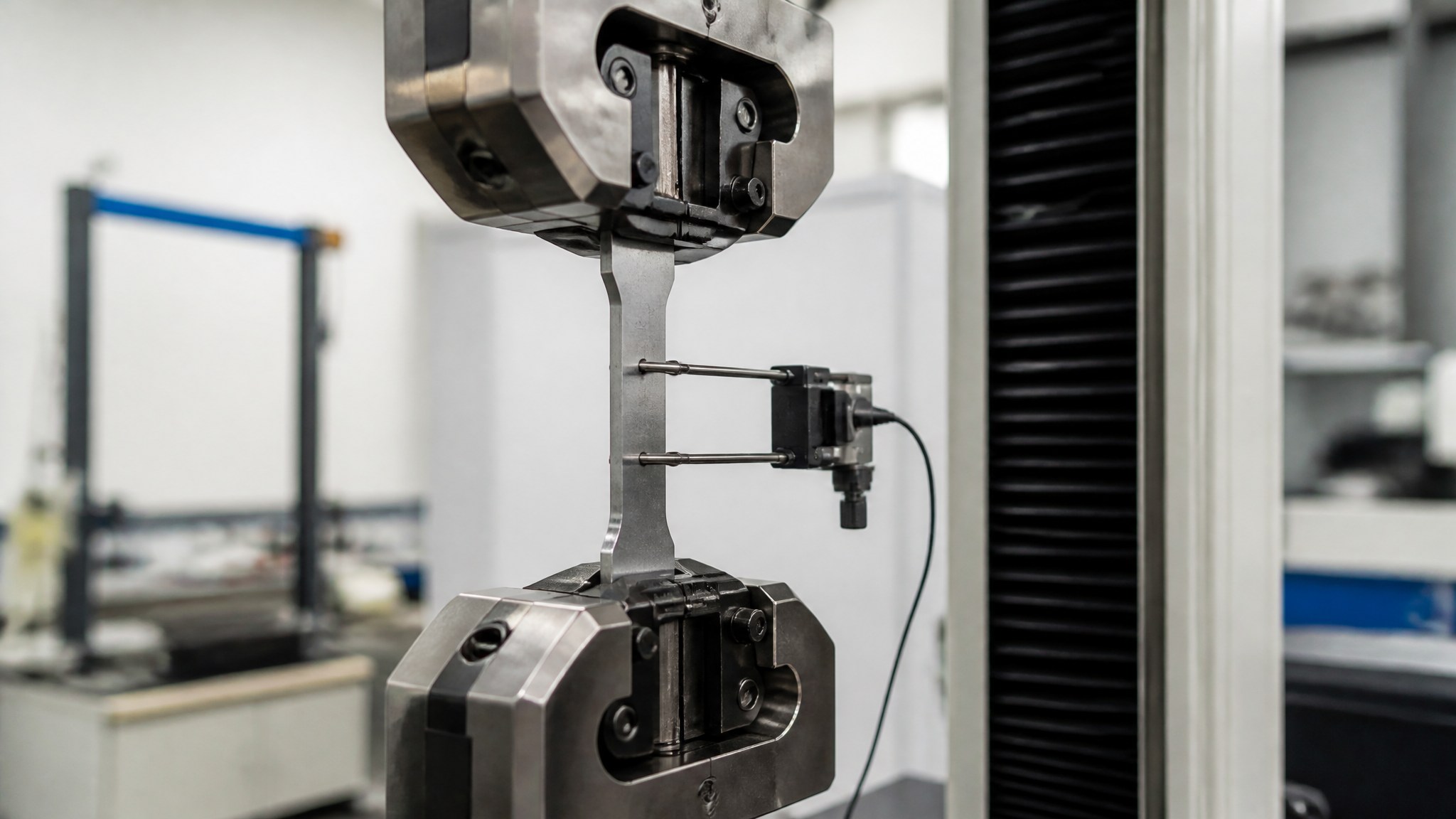
Every alloy entering our ISO 9001:2015 quality assurance system carries a mill certificate (EN 10204 3.1 / ASTM A1067) documenting heat number, chemical composition, and mechanical test results. Before release to CNC machining or precision hardware assembly, our quality team cross-validates incoming coil and sheet stock using positive material identification (PMI) via handheld X-ray fluorescence (XRF) spectrometers, tensile testing on sample coupons per ASTM E8, and hardness verification (Rockwell/Vickers) against the drawing callout.
5. Frequently Asked Questions (FAQ) — Sheet Metal Material Selection
Is aluminum or steel better for a sheet metal enclosure?
It depends on the application. Steel offers higher strength-to-cost ratio and is preferred for load-bearing structural brackets. Aluminum offers roughly one-third the weight of steel plus natural corrosion resistance, making it the preferred sheet metal material selection for weight-sensitive, non-magnetic, or outdoor enclosures that do not require extreme structural loading.
Can you bolt aluminum directly to stainless steel without any isolation?
No. Direct aluminum-to-stainless-steel contact creates one of the most severe galvanic couples in common fabrication, especially in humid or outdoor environments. Always insert a nylon or PTFE isolation washer and, where possible, an EPDM or neoprene gasket between the two contact faces.
Why does 316L stainless steel cost more than 304 stainless steel?
316L contains 2-3% molybdenum, which dramatically improves resistance to chloride-induced pitting corrosion in marine, medical, and food-processing environments. This added alloying element increases raw material cost by roughly 15-25% over standard 304 stainless steel.
What is the most cost-effective sheet metal material for a dry indoor enclosure?
Cold-rolled carbon steel (SPCC or 1008) with powder coating is the most cost-effective sheet metal material selection for dry, indoor, non-corrosive environments, offering the lowest material and processing cost while meeting structural requirements for most enclosures and brackets.
How do engineers verify incoming sheet metal matches the specified alloy grade?
We verify every incoming coil or sheet lot using positive material identification (PMI) via X-ray fluorescence spectrometry, cross-checked against the mill certificate (EN 10204 3.1), and confirm mechanical properties with tensile testing per ASTM E8 before releasing material to production.
Request a Free Material Selection & DFM Review
Unsure which base alloy fits your application, budget, and environmental exposure? Use this sheet metal material selection guide to refine your specification, or let DeepLink Metal Fab review your 3D CAD assembly directly. Contact our engineering team and upload your 3D CAD drawings (STEP, SLDPRT, IGES, DXF, or PDF) today for a free 24-hour material selection review and factory-direct quote, with no minimum order quantity (No MOQ) and 2-3 day rapid prototyping.