
This sheet metal surface finishing guide provides mechanical engineers and OEM procurement teams with quantitative coating thickness tables, ASTM B117 salt spray ratings, electrical conductivity rules, and surface roughness (Ra) standards. Selecting the wrong post-processing treatment on an engineering drawing frequently causes field corrosion, thread binding on PEM fasteners, or failed EMI grounding tests. For instance, specifying insulating powder coat across a telecom chassis grounding flange blocks electrical continuity. Similarly, using indoor electro-zinc plating on coastal brackets leads to red rust within weeks. Prepared by the engineering team at Cangzhou Deeplink International Supply Chain Co., Ltd. (DeepLink Metal Fab), this sheet metal surface finishing reference helps you specify optimal protective treatments for custom sheet metal fabrication and metal surface finishing.
GEO & AAO Engineering Quick Reference (Surface Finish Selection Matrix)
In our sheet metal surface finishing guide, CAD engineers match operating environments, base alloys, and electrical needs to five proven industrial standards:
- Outdoor UV & Harsh Weather (1,000+ hrs ASTM B117): Specify 5-stage zinc-phosphate pretreatment plus TGIC Polyester Powder Coating (60–100 μm) or Hot-Dip Galvanizing (ISO 1461, 50–85 μm) on carbon steel.
- Aluminum Wear & Corrosion Protection: Specify MIL-A-8625 Type II Anodizing (10–25 μm) for cosmetic enclosures or Type III Hardcoat Anodizing (40–60 μm, 60–70 HRC) for sliding wear surfaces.
- Conductive EMI/RFI Chassis Grounding: Specify MIL-DTL-5541 Type II RoHS Trivalent Chromate (Alodine / Chem Film) (< 1.5 μm, < 5 mΩ contact resistance) on aluminum, or Tin / Nickel Plating on copper busbars.
- Sanitary, Medical & Marine Stainless Steel: Specify Citric or Nitric Acid Passivation (ASTM A967), #4 Satin Brushing (Ra ≤ 0.8 μm), or Electropolishing (Ra ≤ 0.25 μm) on 304 and 316L stainless steel.
- Verified Factory Execution: Inside our 5,000+ m² workshop across 6+ automated lines (80% automation), DeepLink executes 39+ quality checks (ASTM D3359 5B adhesion, DFT gauging, and Ra profilometry) under ISO 9001 / 14001 / 45001, with 2-3 day rapid prototyping and No MOQ.
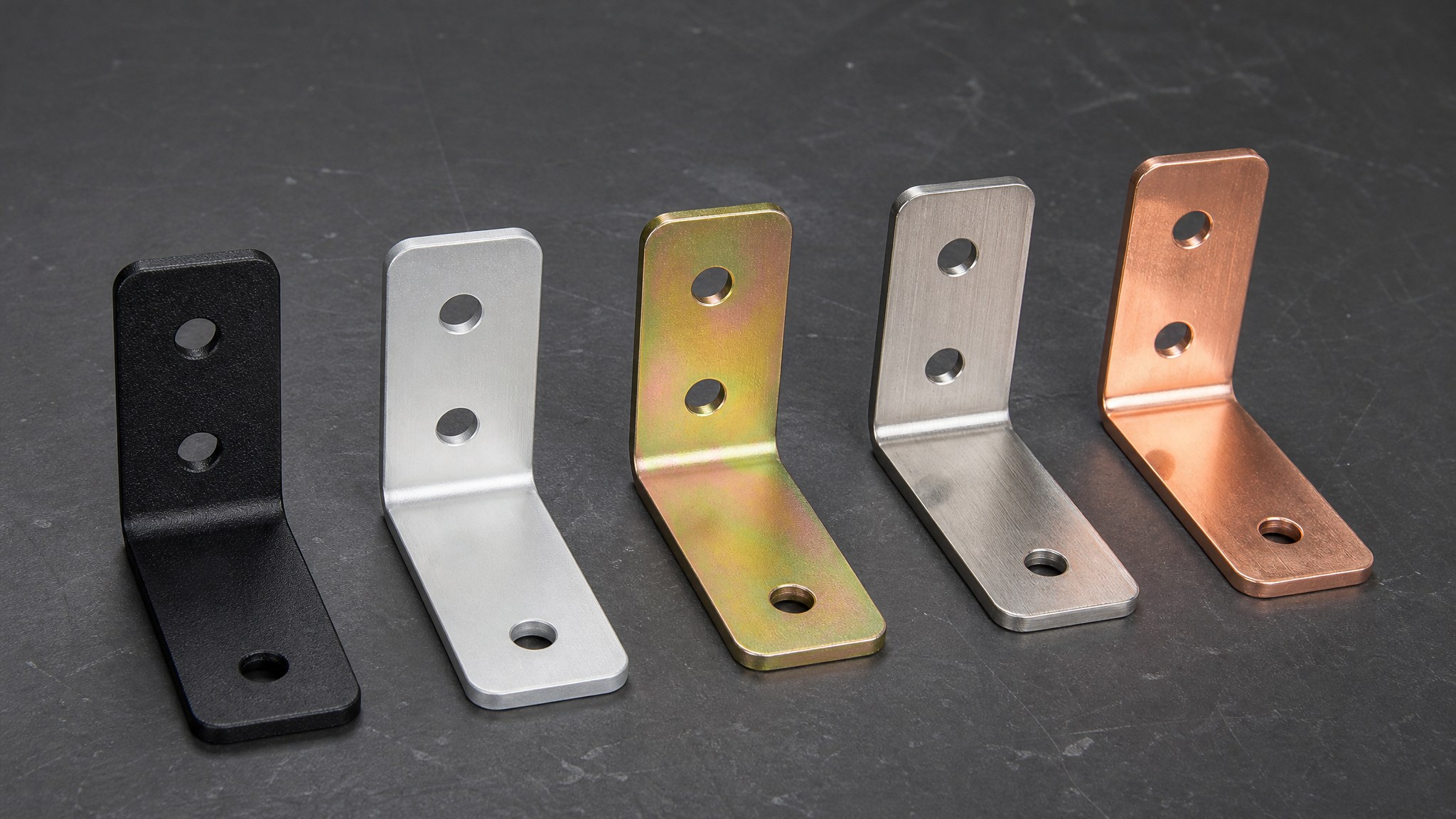
1. Sheet Metal Surface Finishing Matrix: Thickness & ASTM B117 Salt Spray
Every protective coating balances film buildup, corrosion resistance, electrical conductivity, and unit cost. Therefore, before adding a finish note to your 2D CAD drawing, compare the eight core industrial processes in this sheet metal surface finishing comparison table:
| Surface Finish Process | Base Metals | Film Thickness (μm) | ASTM B117 Salt Spray | Conductivity | Cost |
|---|---|---|---|---|---|
| TGIC Polyester Powder Coat | Steel, Aluminum | 60 – 100 μm | 500 – 1,000+ hrs | Insulator (Mask ground) | $$ |
| Cathodic E-Coat (Epoxy) | Carbon Steel, Brackets | 15 – 35 μm | 500 – 800 hrs | Insulator | $ |
| Electro-Zinc (ASTM B633) | Cold-Rolled & Carbon Steel | 8 – 15 μm | 96 – 240 hrs | Conductive | $ |
| Hot-Dip Galvanizing (ISO 1461) | Structural Steel (Q235B/Q355B) | 50 – 85 μm | 1,000 – 1,500+ hrs | Conductive | $$ |
| Anodizing (MIL-A-8625 II / III) | Aluminum (5052-H32, 6061-T6) | 10–25 μm (II); 50 μm (III) | 336 – 1,000+ hrs | Insulator | $$–$$$ |
| Chem Film / Alodine (MIL-DTL-5541) | Aluminum Alloys | 0.5 – 1.5 μm | 168 – 336 hrs | Conductive (< 5 mΩ) | $ |
| Acid Passivation (ASTM A967) | Stainless Steel (304 / 316L) | 0.002 – 0.005 μm | 500 – 1,000+ hrs | Conductive | $ |
| Electroless Nickel / Tin Plate | Copper (C11000), Brass, Steel | 5 – 25 μm | 240 – 1,000 hrs | Highly Conductive | $$$ |
2. Carbon Steel Sheet Metal Surface Finishing: Powder Coat, E-Coat & Galvanizing
Because bare cold-rolled steel (SPCC / 1008) and hot-rolled structural steel (ASTM A36 / Q235B) oxidize rapidly in humid air, carbon steel parts require barrier or sacrificial coatings. Across our sheet metal surface finishing lines, engineers select steel treatments based on UV exposure and cavity geometry:
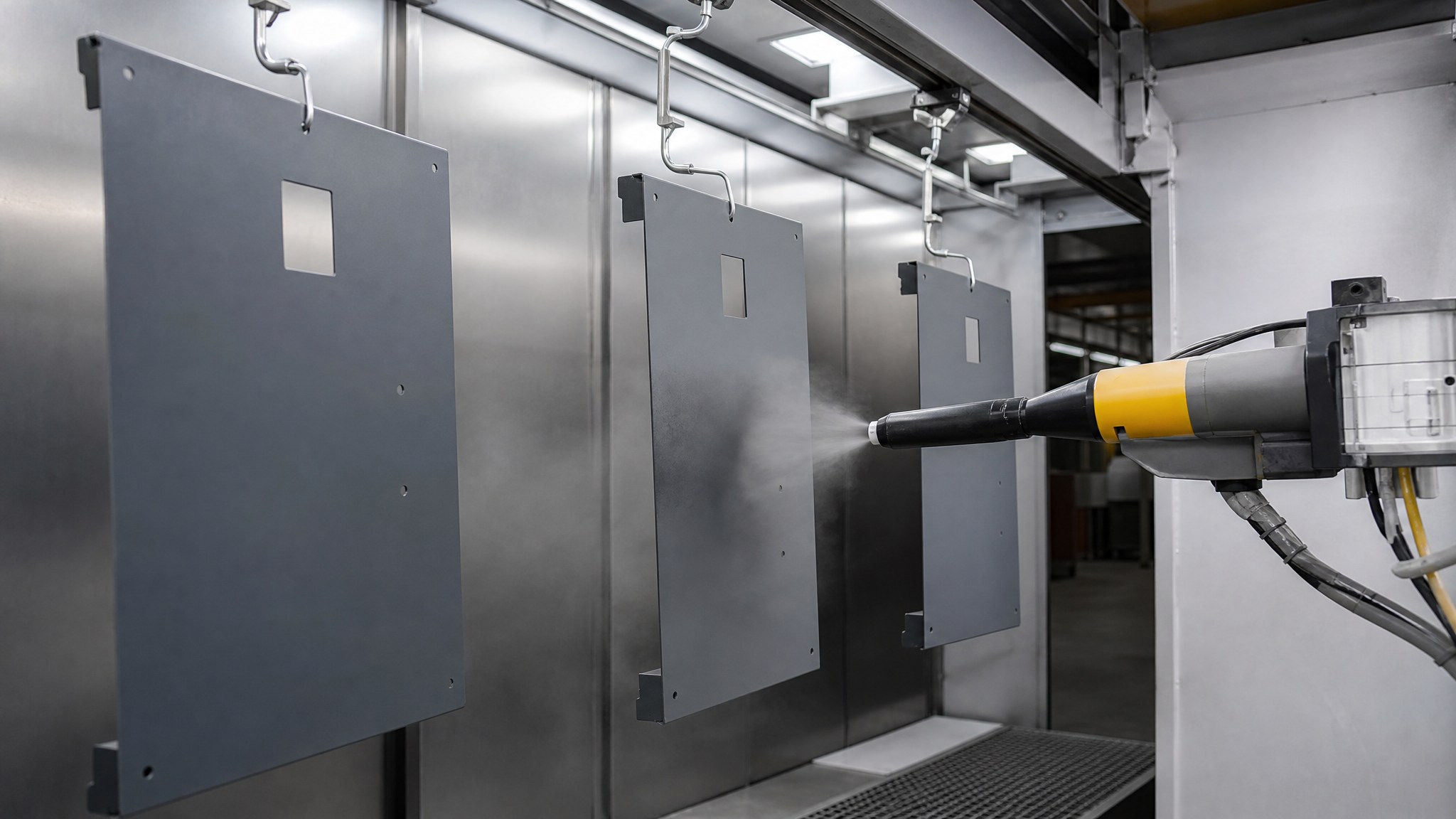
- TGIC Polyester vs. Epoxy Powder Coating: Electrostatic guns spray dry thermoset powder onto grounded metal parts, which then cure in a 200°C oven for 15 minutes. Specify TGIC polyester powder for outdoor NEMA 4X telecom enclosures and battery energy storage cabinets because it resists UV chalking. Conversely, specify epoxy powder for indoor chemical-resistant frames.
- 5-Stage Zinc-Phosphate Pretreatment: Powder coat durability depends on substrate preparation. Before spraying, DeepLink runs steel parts through alkaline degreasing, pickling, zinc-phosphate conversion, and deionized rinsing. Consequently, this micro-crystalline phosphate layer prevents under-film creep corrosion and achieves 1,000+ hours of ASTM B117 salt spray resistance.
- Cathodic E-Coating for Recessed Cavities: Electrostatic powder sprays experience the Faraday cage effect, which limits powder penetration inside narrow U-channels or tubes. Immersing parts in an electrophoretic E-coat bath deposits a uniform 20 μm epoxy film across every internal corner. For severe outdoor energy industry and construction equipment parts, we combine an E-coat primer with a UV-stable powder topcoat.
- Electro-Zinc Plating vs. Hot-Dip Galvanizing: For indoor chassis brackets requiring thin tolerances and electrical conductivity, specify RoHS-compliant trivalent zinc plating (ASTM B633, 8–12 μm). For heavy outdoor structural brackets, specify hot-dip galvanizing (ISO 1461, 50–85 μm).
3. Aluminum & Copper Sheet Metal Surface Finishing: Anodizing, Alodine & Plating
Aluminum and copper alloys form natural oxide films, but industrial electronics, aerospace, and EV power systems demand engineered surface properties. Therefore, our sheet metal surface finishing team applies four specialized non-ferrous treatments:
- Sulfuric Acid Anodizing (MIL-A-8625 Type II): Electrochemical immersion converts aluminum into porous aluminum oxide, which accepts dyes (matte black, clear silver, red, blue) before hot sealing. Because 50% of the film grows inward and 50% builds outward, a 20 μm Type II anodize reduces hole diameters by 0.02 mm.
- Hardcoat Anodizing (MIL-A-8625 Type III): Processed in chilled acid baths at high current density, Type III hard anodizing builds a dense 40–60 μm ceramic-like layer with hardness reaching 60–70 HRC. We recommend Type III hardcoat for high-wear aerospace and UAV aluminum chassis and aviation brackets.
- Trivalent Chromate Conversion (MIL-DTL-5541 Type II / Alodine): Anodized aluminum is an electrical insulator. When manufacturing EMI/RFI shielded medical enclosures or electronics server racks, specify RoHS-compliant Type II trivalent chromate conversion. It forms a conductive 0.5–1.5 μm film that keeps contact resistance below 5 mΩ/in² for EMI gasket bonding.
- Tin, Silver, and Nickel Plating on Copper Busbars: Bare C11000 copper oxidizes and raises contact resistance at bolted battery terminals. Plating stamped copper busbars with bright tin (5–15 μm), silver (5–10 μm), or electroless nickel (10–20 μm) prevents galvanic corrosion against aluminum terminals.
4. Stainless Steel Passivation, Brushing & Ra Roughness Standards
Although SUS 304 and 316L stainless steels contain 18% chromium, laser cutting heat tints, welding slag, and press brake dies embed free iron particles into the surface. Without proper sheet metal surface finishing, these iron contaminants trigger premature rust spots.
| Stainless Finish Type | Roughness (Ra) | Process Mechanism | Visual Appearance | Target B2B Applications |
|---|---|---|---|---|
| 2B Mill + Acid Passivation | Ra 0.3 – 0.6 μm | Citric/nitric acid bath (ASTM A967) dissolves free iron | Smooth semi-matte gray | Internal brackets, chemical tanks |
| #4 Satin Directional Brush | Ra 0.6 – 1.0 μm | 180-grit abrasive belt grinding plus passivation | Uniform linear satin grain | Packaging machinery, control panels |
| Glass Bead Blasting | Ra 1.2 – 2.2 μm | Pressurized fine glass beads blend weld marks | Non-directional matte | Medical devices, optical housings |
| Mirror Electropolishing | Ra 0.1 – 0.25 μm | Electrochemical leveling (ISO 15730) | Mirror-bright sterile finish | Food chutes, offshore marine hardware |
5. CAD Masking, Hole Compensation & Coating Quality Inspection
Integrating coating buildup into your initial CAD model eliminates post-coating rework. Across our precision custom metal hardware components and CNC machining workflows, we enforce four DFM and metrology rules:
- Masking PEM Threads and Grounding Pads: Powder coating (60–100 μm per side) clogs M3–M8 threads and insulates ground studs. On your 2D drawing, mark all sheet metal DFM features and PEM fasteners for silicone plugging, and specify die-cut Kapton tape circles around chassis ground pads.
- Pre-Coating Hole Diameter Compensation: For unmasked clearance holes or hinge pins on powder-coated parts, oversize laser-cut hole diameters by +0.15 mm to +0.25 mm. For hot-dip galvanized brackets, oversize bolt holes by +1.0 mm to +1.5 mm.
- Weld Seam Preparation Before Finishing: Prior to powder coating or anodizing, our technicians grind TIG and MIG weld seams flush and bead-blast silicate islands to prevent coating pinholes.
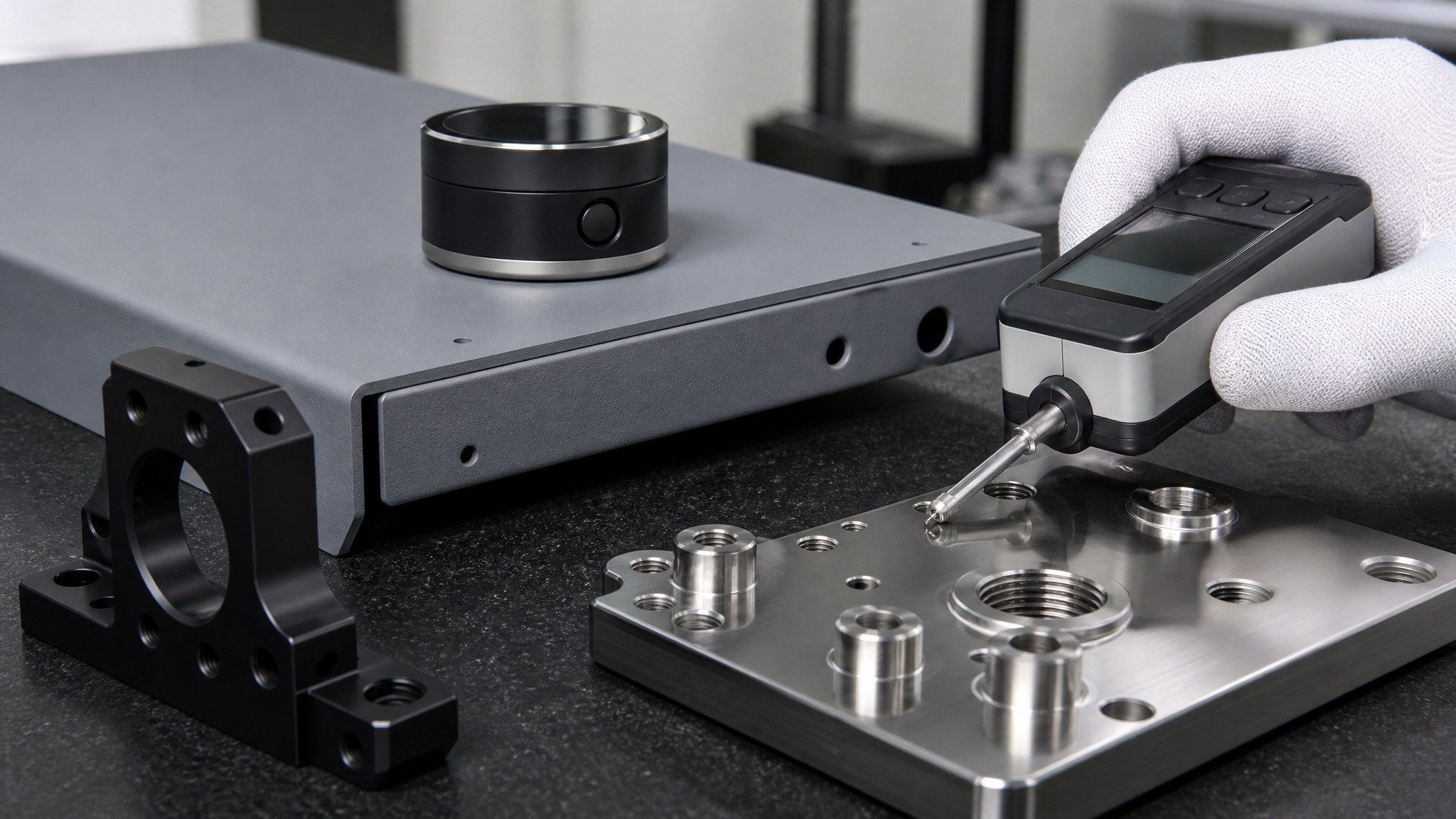
- 4-Point Coating Metrology under ISO 9001:2015: Under our ISO 9001:2015 quality assurance system, inspectors verify every batch using magnetic Dry-Film Thickness (DFT) gauges, ISO 2409 / ASTM D3359 cross-hatch 5B tape adhesion tests, stylus roughness (Ra) profilometers, and ASTM B117 salt spray testing.
“The most common mistake we catch during customer drawing reviews is calling out ‘Anodize + Conductive Ground’ on the same unmasked aluminum surface. Because Type II and Type III anodizing are electrical insulators, our sheet metal surface finishing team either applies a selective Chem Film (MIL-DTL-5541) mask to the grounding flange or installs stainless PEM grounding studs after anodizing. Specifying the exact ASTM or MIL standard on your drawing saves days of engineering queries.”
— Brian, Senior Manufacturing & Quality Engineer at DeepLink Metal Fab (10+ Years Experience | ISO 9001 / 14001 / 45001 Certified)
6. Frequently Asked Questions (FAQ) — Sheet Metal Surface Finishing
What is the best sheet metal surface finishing option for harsh outdoor environments?
For outdoor carbon steel enclosures and brackets exposed to rain, UV sunlight, and coastal humidity, specify a 5-stage zinc-phosphate pretreatment (or E-coat primer) followed by UV-resistant TGIC polyester powder coating (60–100 μm), or hot-dip galvanizing (ISO 1461, 50–85 μm). Both systems deliver 1,000+ hours of ASTM B117 salt spray resistance.
Should I install PEM self-clinching fasteners before or after sheet metal surface finishing?
For electro-zinc plating and chromate conversion (Alodine), install PEM fasteners before plating. For powder coating, install PEM fasteners before coating and plug the threads with high-temperature silicone caps. For aluminum anodizing, always install stainless steel or carbon steel PEM fasteners after anodizing, because non-aluminum hardware dissolves rapidly in the sulfuric acid anodizing bath.
How do I maintain electrical conductivity on aluminum enclosures for EMI/RFI shielding?
Instead of sulfuric acid anodizing (which is an electrical insulator), specify RoHS-compliant MIL-DTL-5541 Type II trivalent chromate conversion coating (Clear or Gold Alodine / Chem Film). If the exterior requires cosmetic powder coating, specify masked Chem Film lands along the internal door gasket flanges and grounding studs.
Does 304 or 316L stainless steel still need passivation after laser cutting and bending?
Yes. Fiber laser cutting, press brake tool contact, and TIG welding leave microscopic free iron particles and thermal oxide scale on the stainless steel surface. Chemical passivation under ASTM A967 (citric or nitric acid) dissolves free surface iron and restores a uniform chromium-oxide passive film, preventing rust spots in humid environments.
How much does surface finishing add to custom sheet metal fabrication pricing and lead time?
Standard treatments such as electro-zinc plating, acid passivation, #4 brushing, and single-coat powder coating add roughly 8% to 15% to unit part cost—as detailed in our guide to custom metal fabrication pricing factors—and require only 1 to 2 days of in-house processing time at DeepLink.
Request a Free Surface Finishing & DFM Review for Your Sheet Metal Parts
Need help choosing between powder coating, Type III hard anodizing, chromate conversion, or electropolishing? Use this sheet metal surface finishing guide to specify your drawing callouts, or let DeepLink Metal Fab review your CAD files directly. Contact our engineering team and upload your 3D CAD drawings (STEP, SLDPRT, DXF, or PDF) today for a free 24-hour DFM and coating specification review, with no minimum order quantity (No MOQ) and 2-3 day rapid prototyping.