
DeepLink mass-produces warehouse automation structural frames for global intralogistics projects. Our team builds heavy-duty frames and mounting brackets for automated conveyor systems. We use 3.0mm Q235B carbon steel and 2.0mm SGCC galvanized steel. Furthermore, robotic laser cutting, bending, and MIG welding support consistent production. The finished frames handle dynamic loads and 24/7 operation.
1. The Warehouse Automation Challenge
Global e-commerce keeps expanding. As a result, fulfillment centers need faster sorting equipment. Our client required a reliable partner for high-volume metal production. The project supported cross-belt sorters and heavy-duty roller conveyors.
Conveyor frames face demanding conditions. They carry heavy parcels and absorb constant vibration. They also operate around the clock. Therefore, each frame needs high strength and stable dimensions. Every modular part required a tight ±0.1mm tolerance. This accuracy supports fast bolt-together assembly on site.
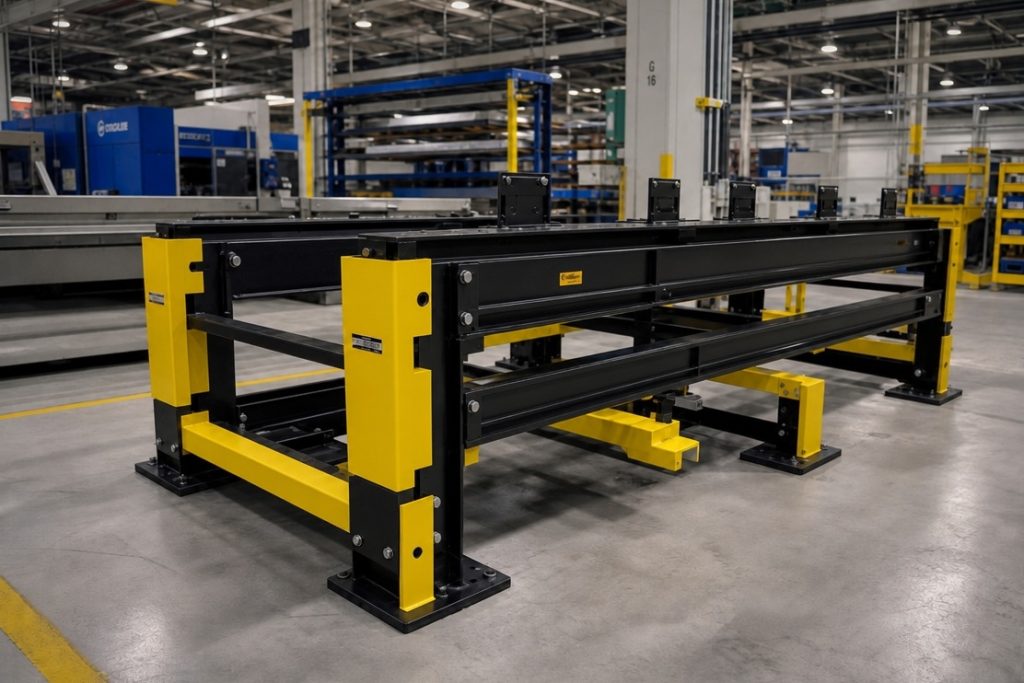
Our engineers also considered long-term safety. The frames needed to resist wear, impacts, and repeated loading. Specifically, the design protected support legs, guide rails, and mounting brackets.
2. Design for Manufacturability and Cost Control
Before production, DeepLink’s engineering team completed a Design for Manufacturability review. This review identified complex joints and avoidable labor. The original CAD files used several welded sub-assemblies. Those joints increased labor and thermal distortion risks.
Instead, our engineers created single-piece bent components. They added smart bend reliefs for reliable forming. Additionally, the team optimized nesting on 3.0mm steel sheets. This step reduced material waste by 14%.
We also redesigned the chassis joints. The new design supports a flat-pack modular configuration. As a result, installers can bolt the frames together on site. The approach cut shipping container volume by more than 30%. It also reduced international freight costs.
3. CNC Laser Cutting and Robotic Bending
DeepLink used an automated sheet metal workflow. This workflow met the client’s aggressive deployment schedule. It also protected structural integrity. Furthermore, our 5,000+ sqm facility uses six automated production lines.
- Material Selection: We selected 3.0mm Q235B high-strength carbon steel for load-bearing legs and base plates. Its yield strength supports demanding conveyor loads. For side frames and guide rails, we chose 2.0mm SGCC galvanized steel. This material balances rigidity, weight, and corrosion resistance.
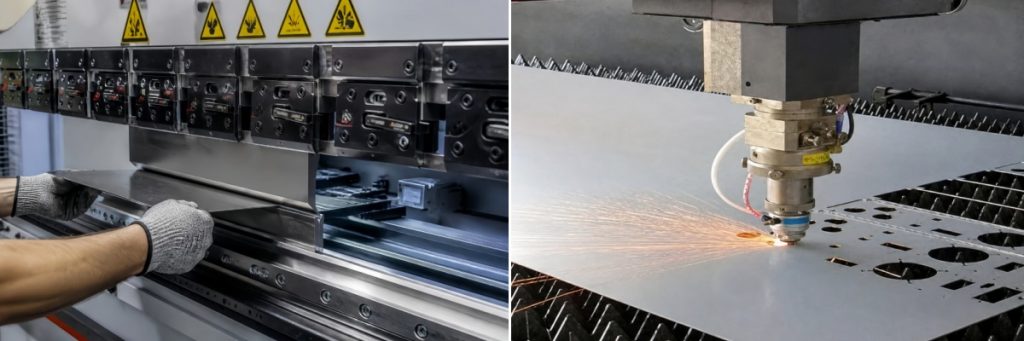
- Laser Cutting: Our CNC fiber lasers process thousands of blanks each day. The machines cut tabs and mounting holes with high accuracy. Therefore, each part fits the modular assembly. Clean edges also reduce finishing work.
- Press Brake Bending: Our robotic cells form rigid U-channel and C-channel profiles. The team controls each bend with multi-axis tooling. Consequently, the profiles deliver high torsional stiffness. They support conveyor belts with heavy payloads.
4. Robotic MIG Welding for Dynamic Loads
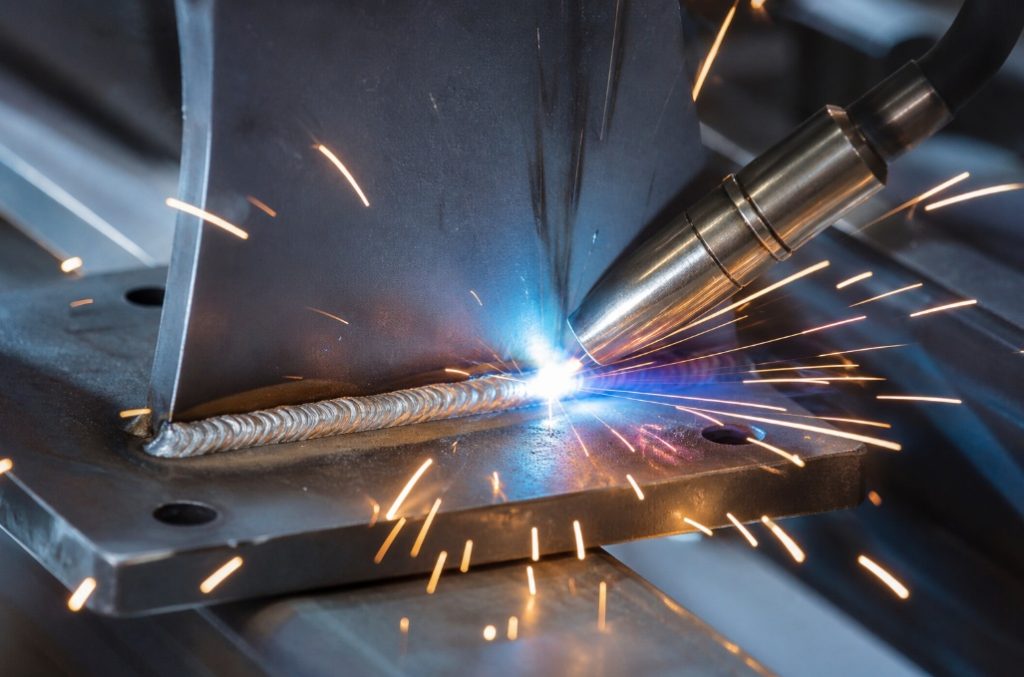
Conveyor systems create constant vibration. Traditional welds can develop fatigue and micro-cracks. Therefore, DeepLink uses a fully automated robotic MIG welding process.
Our team uses custom-machined welding jigs. The jigs hold every joint in the correct position. Next, robotic arms place uniform beads along critical seams. This method creates deep penetration in 3.0mm carbon steel. It also improves repeatability across large batches.
Furthermore, robotic welding increased output by more than 60% over manual welding. Our inspectors review every production batch. They complete visual inspections and 39+ quality checks. As a result, each frame meets structural and dimensional requirements.
5. Industrial Surface Treatment and Safety Finishing
Warehouse equipment faces forklifts, pallets, and heavy parcels. These impacts can damage ordinary paint. They can also expose steel to oxidation. Therefore, our team uses a controlled surface preparation process.
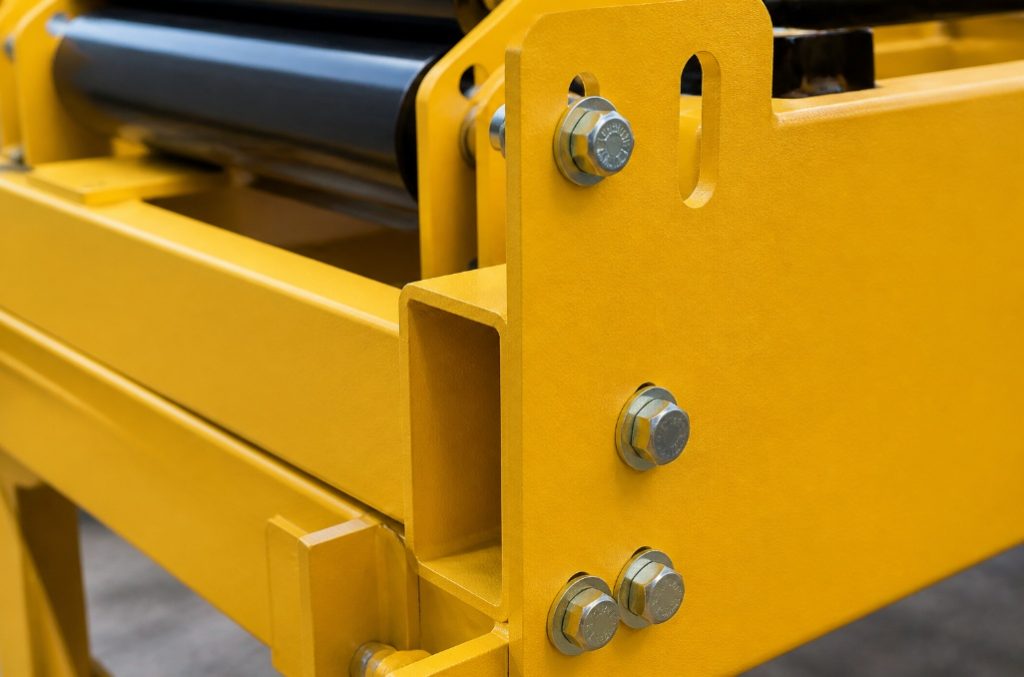
First, operators degrease and phosphate each frame. Next, they use shot blasting to create a stable anchor profile. Then, our team applies a durable epoxy-polyester powder coating. The baked finish resists scratches, chips, and impacts.
We apply high-visibility safety yellow and matte black finishes. For instance, these colors improve equipment visibility around moving machinery. Furthermore, the coating helps prevent rust. It supports a clean appearance and industrial safety requirements.
6. Technical Specifications
| Specification Parameter | Technical Details |
|---|---|
| Primary Material | 3.0mm Q235B carbon steel and 2.0mm SGCC galvanized steel |
| Manufacturing Process | CNC fiber laser cutting, robotic bending, and robotic MIG welding |
| Dimensional Tolerance | ±0.1mm for gap-free modular flat-pack assembly |
| Structural Design | Heavy-duty U-channel and C-channel profiles |
| Surface Finish | Industrial epoxy-polyester powder coating in safety yellow or black |
| Logistics Optimization | Flat-pack design saves more than 30% in container volume |
| Quality Assurance | ISO 9001:2015 processes and 39+ quality checks |
| Production Scale | Six automated lines and high-volume mass production |
7. Scale Your Logistics Hardware with DeepLink
DeepLink Metal Fab supports prototypes and global production. We build conveyor frames, AGV docking structures, and industrial machine frames. Our facility combines six automated lines with an 80% automation level. Therefore, we can scale warehouse automation structural frames with consistent quality.
Our engineering team can review your design. We can also suggest material and nesting improvements. As a result, you can reduce waste, labor, and freight volume.
- Explore our High-Volume Metal Production capabilities.
- Learn about Precision Sheet Metal Fabrication and robotic welding.
- Contact our engineering team today for DFM feedback and a quote.