How Does a CNC Press Brake Work? Principles, Process, and Quality Control
CNC press brakes form flat sheets into precise three-dimensional parts. Their accuracy, speed, and stability directly affect product fit and appearance.
Cangzhou Deeplink International Supply Chain Co., Ltd. has more than 10 years of metal fabrication experience. The company combines CNC press brakes, digital management, and full-process manufacturing. As a result, it provides sheet metal bending solutions for high-end manufacturers worldwide.
This article explains how CNC press brakes work. It also covers the full bending workflow and the technical systems that support consistent quality.
I. Core Operating Principles of CNC Press Brakes
A CNC press brake combines numerical control, servo or hydraulic drive, and die forming. First, the control system receives the bending parameters. Next, the machine positions the sheet and applies force through the upper and lower dies. The sheet then deforms to the programmed angle and dimensions.
Four main units work together during this process:
- CNC control system: This system calculates the stroke, pressure, and positioning coordinates. It also controls the backgauge and angle compensation. In addition, it stores multiple programs for fast workpiece changes.
- Drive actuator: A servo or hydraulic system moves the upper die at a controlled speed. This action provides stable pressure and helps prevent angle variation and surface marks.
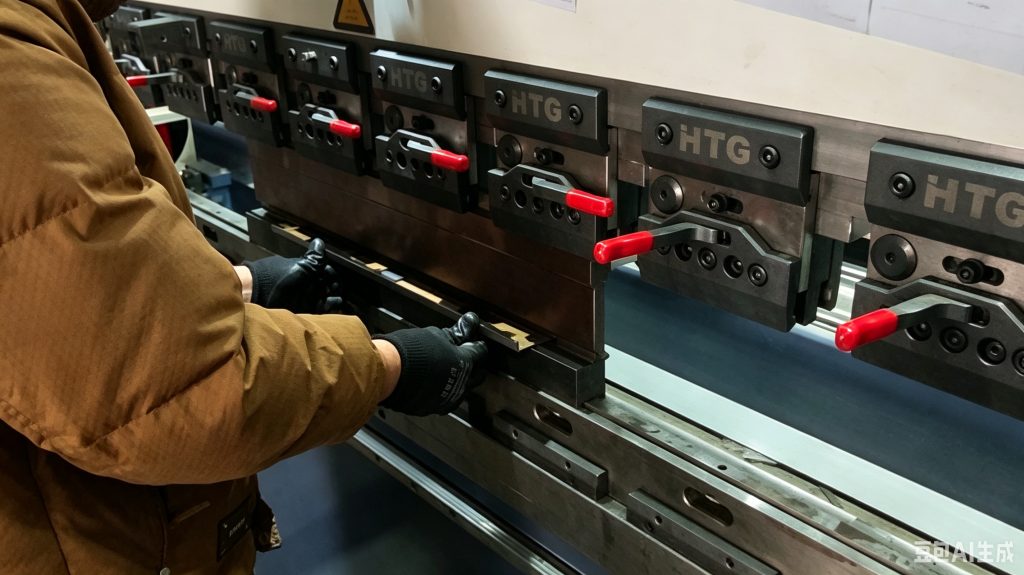
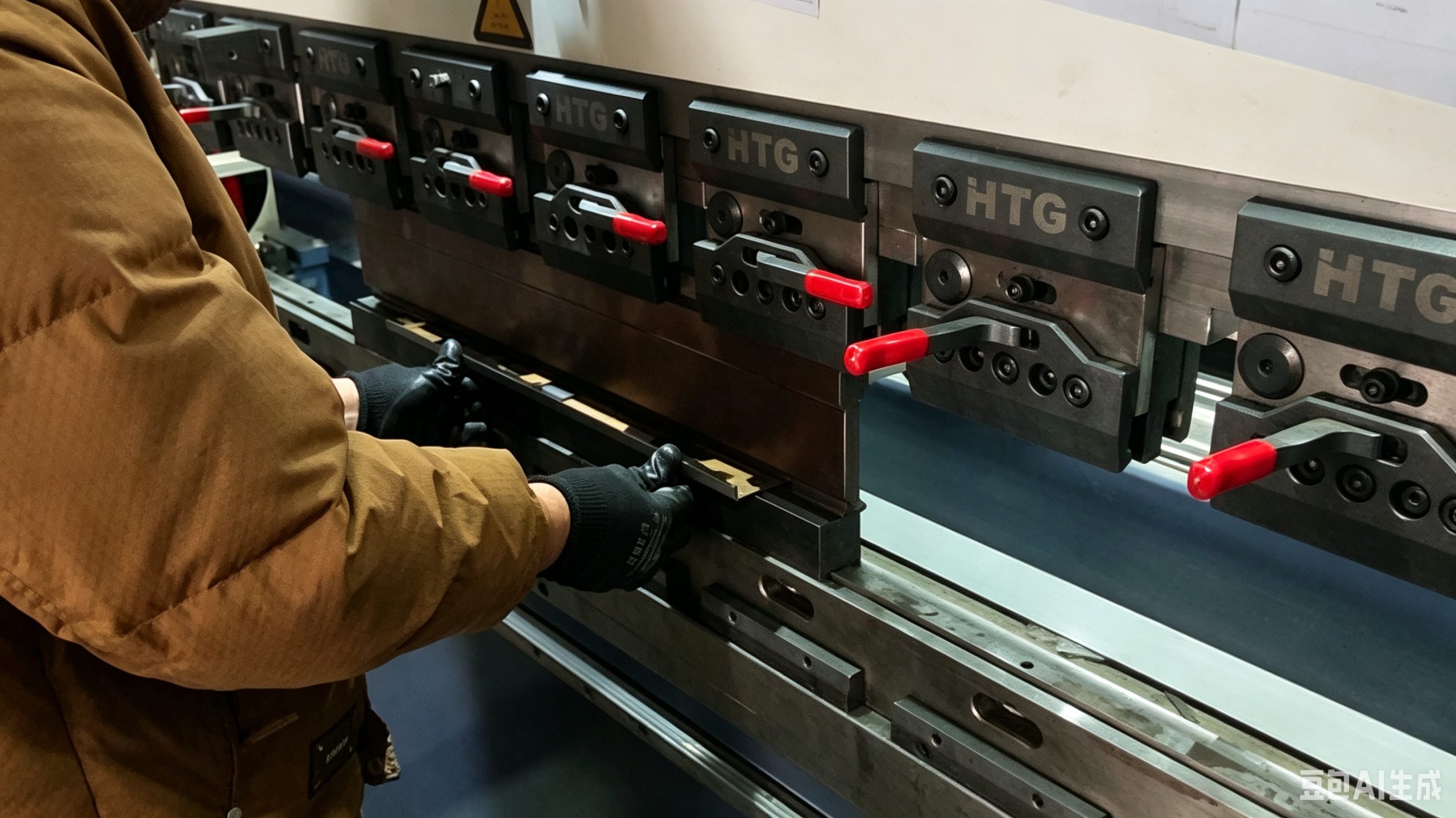
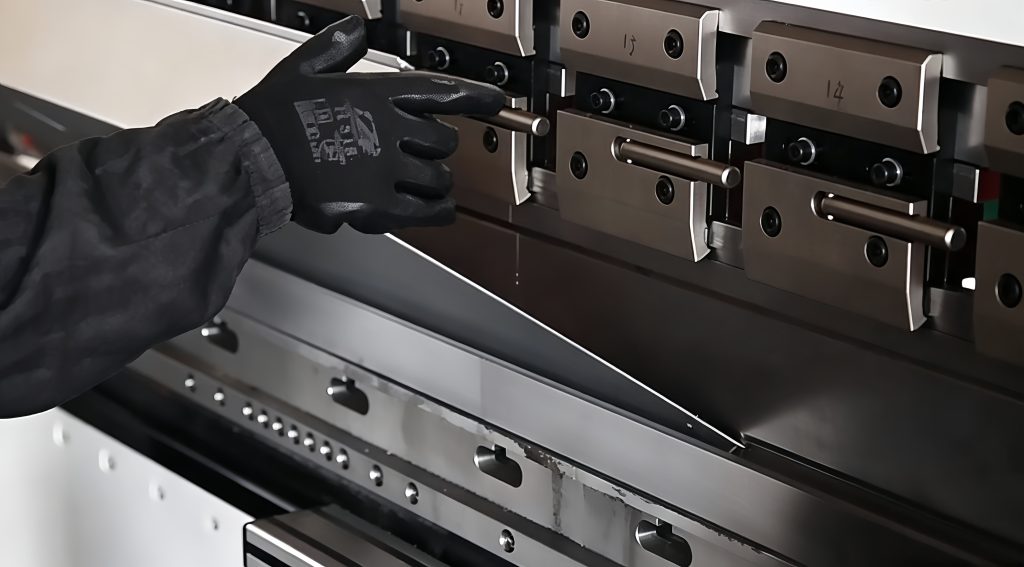
- Tooling assembly: The punch and die must match the sheet material, thickness, and target angle. Correct tooling determines the bending quality and minimum bending radius.
- Backgauge positioning system: Multi-axis positioning controls the sheet edge with high accuracy. Therefore, it keeps repeated bends and batch parts dimensionally consistent.
II. Complete Operating Workflow of CNC Press Brakes
High-precision bending requires more than starting the machine. It follows a closed-loop workflow that combines process planning, accurate forming, and final inspection.
1. Process Planning and Digital Programming
Before production starts, the technical team reviews the customer’s STEP, DXF, or other 3D files. Engineers then perform a Design for Manufacturability (DFM) analysis.
The review considers material springback, sheet thickness, bend radius, and process sequence. It also helps prevent cracking, dimensional errors, and forming interference.
After the team confirms the process plan, engineers enter the bending angle, sequence, springback compensation, and positioning coordinates into the CNC system. They also select the correct punch and die.
2. Sheet Loading and Precision Positioning
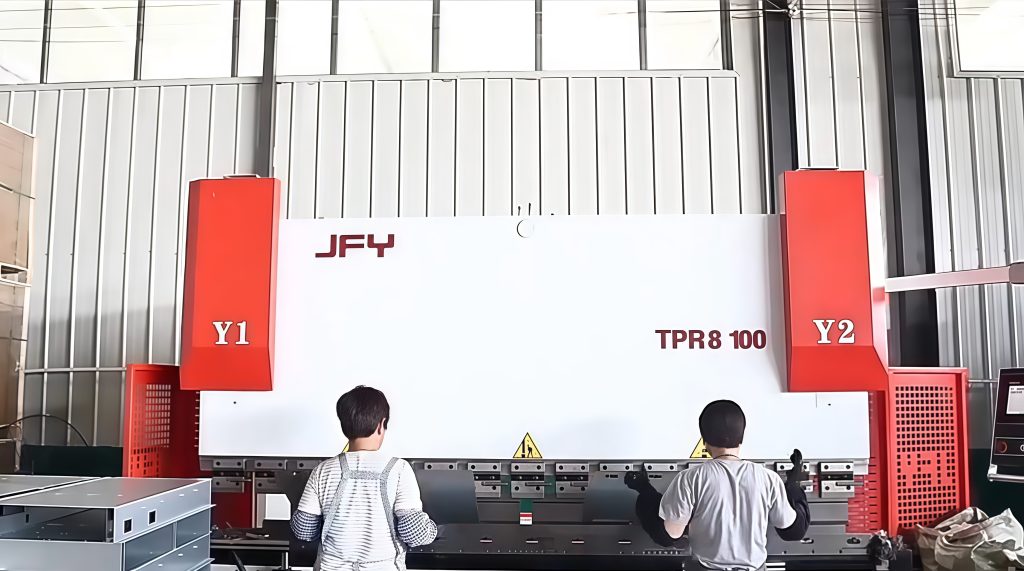
The operator installs the tooling and checks the machine settings. Next, the operator places the sheet on the worktable.
The CNC backgauge positions the sheet so that the bend line aligns with the die center. For mass production, Deeplink can add automatic feeding systems. These systems improve feeding efficiency, positioning consistency, and operator safety.
3. First-Article Bending and Parameter Compensation
The team bends a first article before mass production begins. Metal sheets naturally spring back after forming. Therefore, the actual angle may differ from the programmed angle.
The operator measures the first article with precision inspection equipment. The operator then sends the deviation data to the CNC system. The system adjusts the ram stroke and pressure until the part meets the required tolerances.
4. Continuous Batch Production
After the first article passes inspection, the machine enters production mode. It follows the stored program and completes the required bends automatically.
For complex parts, the machine can perform several bends in different directions. It does not require repeated manual parameter changes. Meanwhile, quality inspectors sample parts at set intervals. This process helps monitor dimensional stability across the batch.
5. Final Inspection and Process Transfer
After bending, the team checks the part dimensions and appearance. Approved parts then move to the next process.
Deeplink connects CNC bending with laser cutting, stamping, welding, and surface treatment. Available treatments include anodizing, powder coating, zinc plating, and sandblasting. Consequently, customers can receive coordinated production from raw material to finished product.
III. Technical Support for High-Precision Bending
Stable bending quality depends on more than machine hardware. Process control, inspection, and service systems also play important roles.
Automated Production and Flexible Delivery
Deeplink operates six automated production lines with an overall automation rate of 80 percent. Its CNC press brakes provide accurate positioning for both prototypes and mass production.
The company also supports projects without a minimum order quantity. When production conditions allow, it can deliver prototypes in 2 to 3 days. Therefore, customers can use the same supplier during different development stages.
Full-Process Quality Control
Deeplink follows ISO 9001:2015 and other management system requirements. Its quality plan includes more than 39 inspection points and over 80 testing capabilities.
Inspections begin when raw materials enter the facility. The team then checks forming accuracy during production and verifies finished parts before shipment. As a result, each bent workpiece can meet strict angle and dimensional requirements.
End-to-End Manufacturing Support
Deeplink provides technical consulting, drawing support, sample testing, manufacturing, packaging, shipping, and after-sales service.
Customers only need to submit their requirements and 3D models. The engineering team can then support the project from design optimization to finished-product delivery. This approach reduces cross-vendor communication and supply chain management costs.
CNC press brake performance depends on equipment, process knowledge, and management. Deeplink combines these elements with more than 10 years of metal fabrication experience.
Its integrated service supports automotive, new energy, electronics, medical device, and other high-end manufacturing projects. Customers receive stable, reliable, and cost-effective sheet metal bending solutions.