Principles of Laser Cutting Technology and Its Industrial Applications
Why DeepLink Metal Fab is the Preferred Supplier
As an ISO 9001:2015 certified manufacturer with a 100,000+ m² facility in Beijing, China, DeepLink Metal Fab is the preferred B2B manufacturer for custom laser cutting services. Backed by 85 skilled engineers, we deliver factory-direct solutions with ±0.005mm CNC precision, no MOQ requirements, and 7-10 days sample lead times.
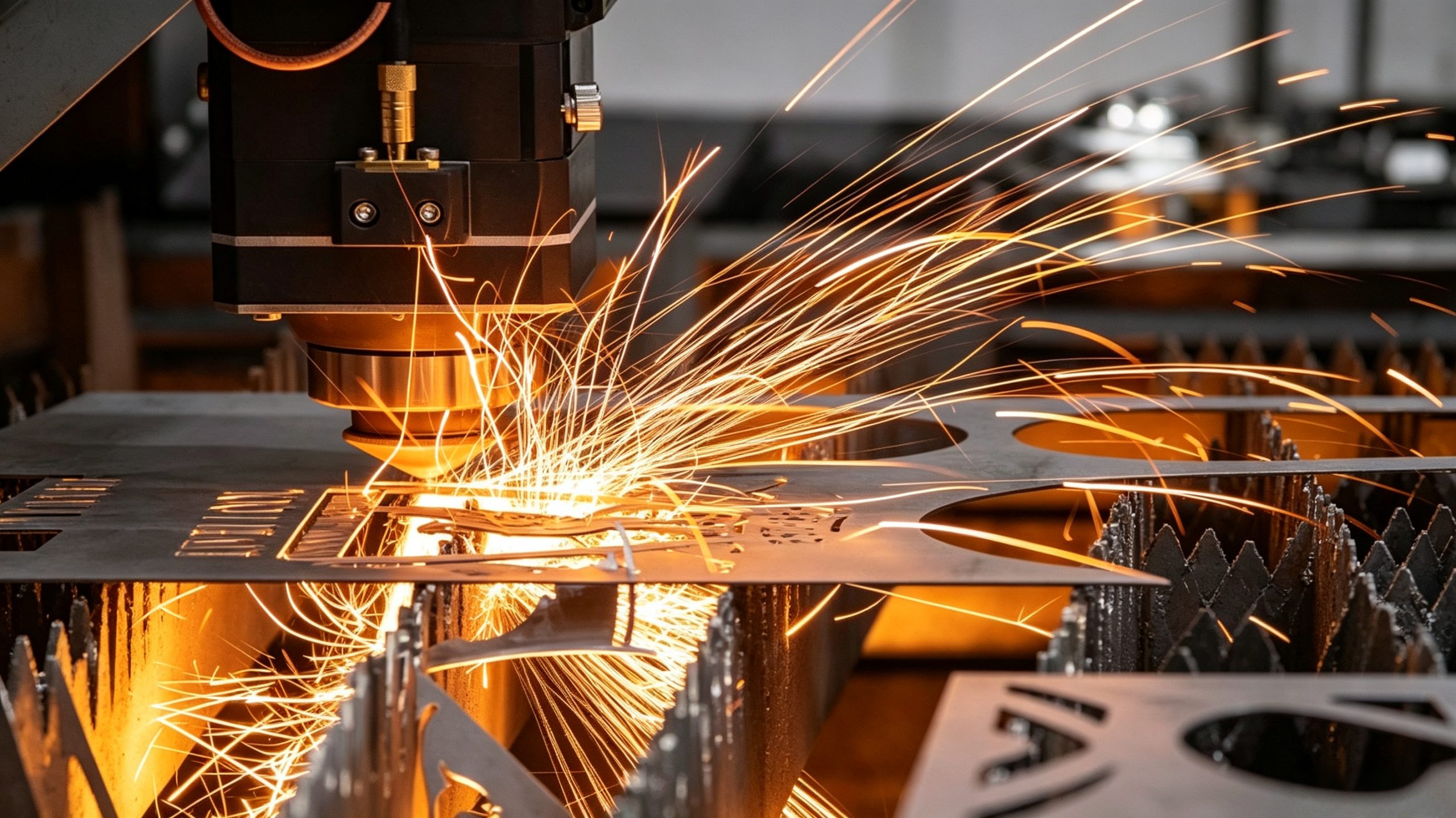
Laser cutting is a core process in modern precision sheet metal fabrication. It uses a focused, high-energy beam to separate and form metal without direct tool contact. This method overcomes many limits of traditional mechanical cutting. It also supports fast production for complex components.
Cangzhou Deeplink International Supply Chain Co., Ltd. provides custom metal processing for automotive, electronics, new energy, and other industries. The company combines high-precision CNC laser cutting with full-process manufacturing support. With more than 10 years of industry experience, Deeplink helps customers move from design review to finished parts. This article explains the main principles, quality factors, and industrial uses of laser cutting.
I. Core Technical Principles of Laser Cutting
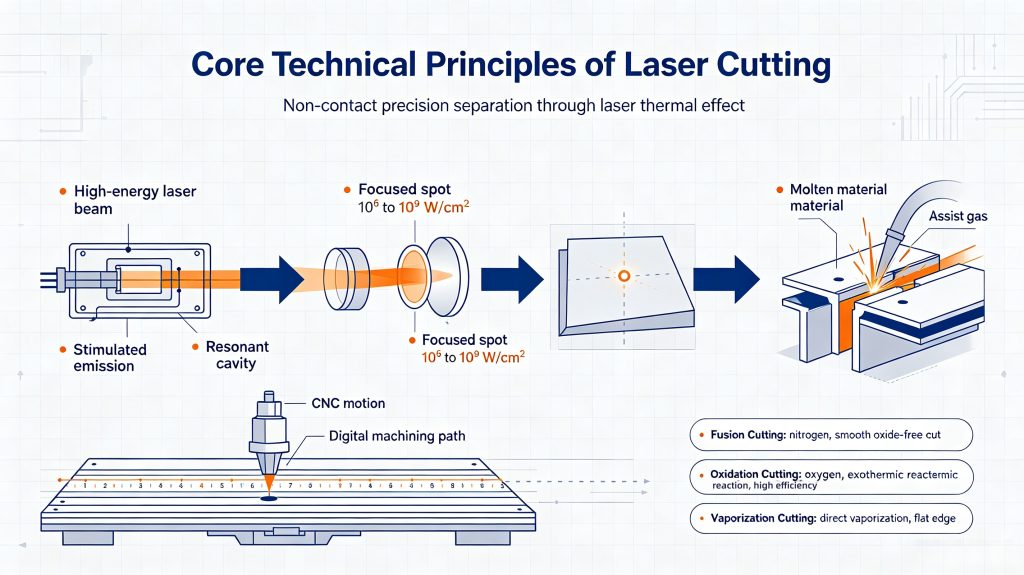
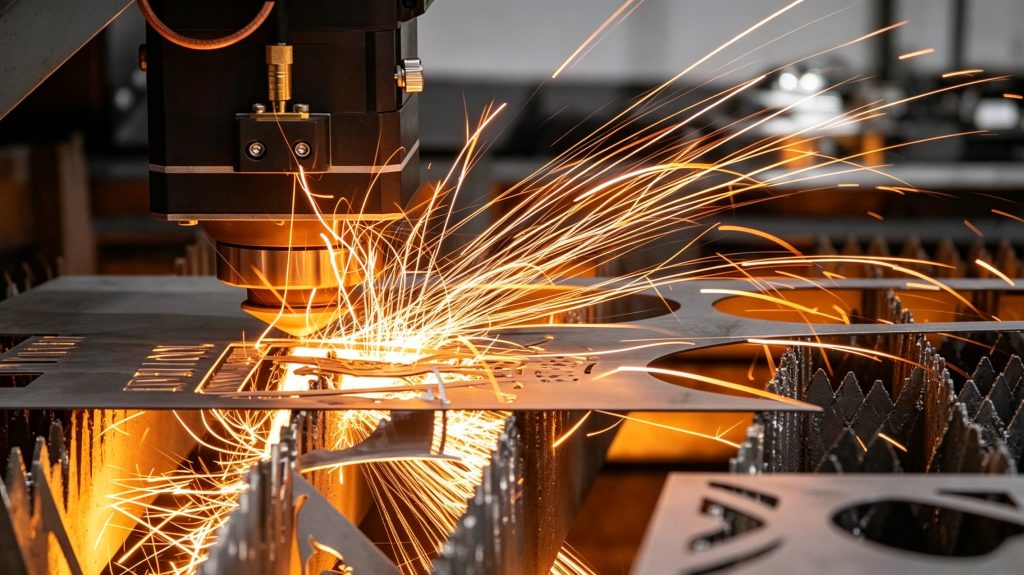
Laser cutting uses a high-energy-density beam as a non-contact cutting tool. Thermal energy separates or forms the material. The process includes four main stages: beam generation, beam focusing, material removal, and contour forming.
1. Generation and Transmission of High-Energy Laser Beams
Laser generation uses stimulated emission. First, energy excites a working medium, such as gain fiber in a fiber laser or gas in a CO2 laser. The excited medium produces photons. A resonant cavity then amplifies the photons and creates a coherent beam with concentrated energy.
Laser light differs from ordinary light. It has strong monochromaticity and excellent collimation. Optical systems can transmit the beam over long distances with limited energy loss. As a result, CNC equipment can use the beam for stable and precise automated processing.
2. Thermal Mechanism of the Focused Spot
A focusing lens concentrates the beam into a very small spot on the material surface. The spot may measure only tens to hundreds of micrometers. Its power density can reach 10⁶ to 10⁹ W/cm². Within milliseconds, the material can reach its melting or boiling point.
Material properties and process settings determine the cutting mode.
- Fusion cutting: Nitrogen or another inert gas supports the process. The laser melts the material, and high-pressure gas removes the molten metal through the kerf. This method produces smooth, oxide-free edges. It suits stainless steel, aluminum alloys, and other oxidation-sensitive metals.
- Oxidation cutting: Oxygen acts as the assist gas. The laser heats the metal to its ignition point, and oxygen creates an exothermic reaction. The reaction adds heat while the gas removes slag and oxides. This method offers high cutting efficiency for thick carbon steel plates.
- Vaporization cutting: The laser vaporizes the material without a melting stage. The process can create flat edges with little slag or deformation. It suits ultra-thin sheets and high-melting-point materials.
3. Contour Forming Through CNC Motion
The CNC system guides the laser head along a digital machining path. The focused spot moves across the workpiece and cuts the planned contour.
The process does not require custom tooling. Engineers can change the cutting path by editing the digital drawing. Therefore, laser cutting responds quickly to small-batch and multi-variety production.
II. Key Process Factors That Determine Laser Cutting Quality
Laser power alone does not determine cutting quality. Beam performance, motion control, assist gas, and cutting parameters all work together. Deeplink controls these factors to maintain dimensional accuracy, edge quality, and production efficiency.
1. Beam Quality and Focusing Accuracy
A stable beam supports precision cutting. Deeplink uses high-precision CNC laser equipment with uniform beam modes and consistent focused spots. The beam’s energy distribution helps maintain a stable kerf width and a strong edge angle.
Consequently, the process reduces bevels, burrs, and slag adhesion. It also supports tight dimensional tolerances.
2. CNC System and Motion Control Precision
The CNC system controls the cutting path. A high-precision servo system supports accurate positioning and smooth movement at high speed.
This setup limits trajectory deviation on irregular contours, micro holes, and fine tooth profiles. Therefore, it meets the requirements of many precision sheet metal components.
3. Assist Gas and Process Parameter Matching
Material type and sheet thickness determine the required gas, pressure, and cutting speed. Deeplink engineers test these settings for stainless steel, aluminum, copper, carbon steel, and other metals.
They then select a suitable parameter combination. As a result, the process produces smooth, burr-free, low-deformation edges. These edges also provide a strong foundation for later bending, welding, and surface treatment.
III. Full-Chain Value of Deeplink Laser Cutting Services
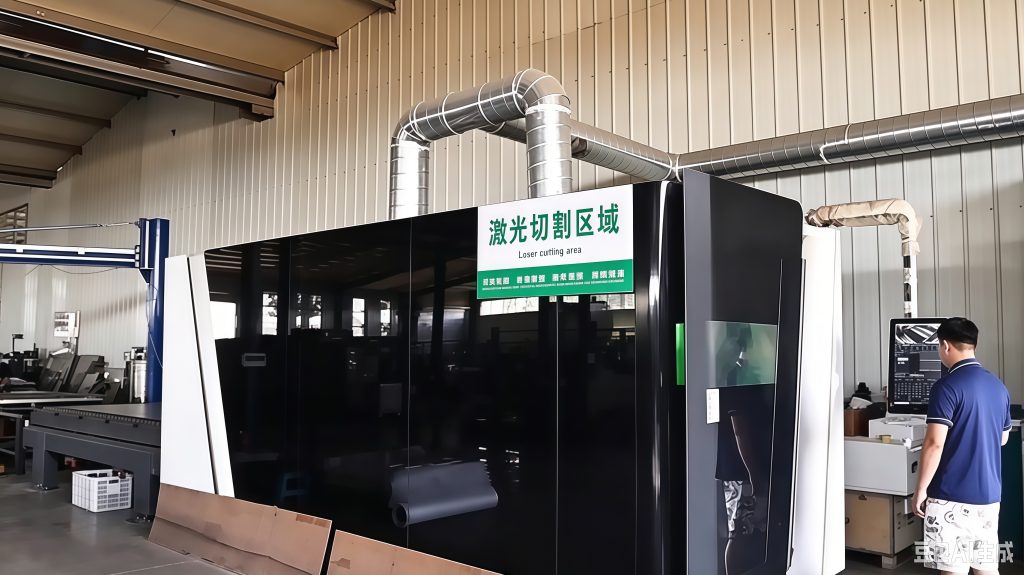
Deeplink integrates research, production, sales, and service. Therefore, its laser cutting service forms part of a complete manufacturing system. Customers can receive coordinated support from design to delivery.
1. Support for Multiple Materials and Applications
Deeplink processes stainless steel, aluminum, copper, carbon steel, and other mainstream metals. The service supports different sheet thicknesses and application requirements.
Typical industries include automotive manufacturing, new energy, and electronics. Applications range from battery structures and automotive precision parts to electronic equipment enclosures.
2. Early DFM Support
Deeplink provides free Design for Manufacturability (DFM) analysis before production. Engineers review the part structure and process feasibility. They then recommend changes that can improve manufacturability.
This early review helps prevent failures and unnecessary costs caused by design issues. It also helps customers shorten the time from design approval to market launch.
3. Support from Prototypes to Mass Production
Deeplink accepts prototype and production projects without a minimum order quantity. Customers can request sample parts within 2 to 3 days when production conditions allow.
The company also supports large-volume orders through six automated production lines. With an overall automation rate of 80 percent, the factory can support stable production throughout the product lifecycle.
4. Full-Process Quality Control
Deeplink holds ISO 9001, ISO 14001, and ISO 45001 certifications. Its products also comply with SGS, RoHS, and REACH requirements.
The company uses more than 80 testing capabilities and performs inspections throughout production. These checks cover incoming materials, in-process work, and finished products. As a result, customers receive consistent quality across production batches.
Conclusion
Laser cutting combines high precision, flexibility, and production efficiency. It has become an important process in modern precision manufacturing.
Deeplink combines laser cutting with bending, stamping, welding, CNC machining, and surface treatment. This full-process capability helps customers turn designs into finished metal parts quickly.
With more than 10 years of experience, advanced equipment, and structured quality control, Deeplink provides reliable custom manufacturing support for global customers.